If you’ve ever shopped for off-grid solar systems, or upgraded your RV or tiny home power setup, you’ve probably come across the term “pure sine wave solar inverter charger” at some point. Like a lot of industry jargon, it sounds complicated at first—like something only electrical engineers could wrap their heads around. But let me tell you, after nearly a decade working as a solar inverter charger supplier, I’ve learned that breaking it down is way simpler than it sounds. Today, I’m walking you through exactly what these devices do, why they matter, and why they’re non-negotiable for anyone serious about reliable, safe solar power. Solar Inverter Charger
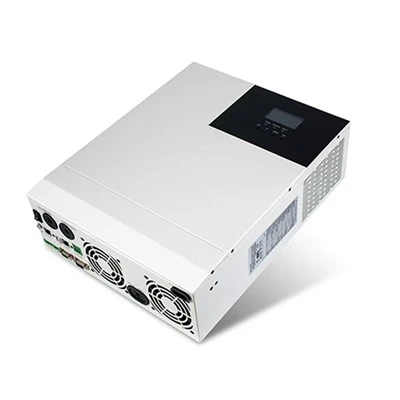
First, let’s start with the basics. If you’re new to solar, you already know that the panels on your roof or array soak up sunlight and turn it into direct current (DC) electricity. That’s the same kind of power that runs your phone chargers, car batteries, and the batteries in your solar storage system. But here’s the thing: almost every device in your home or RV runs on alternating current (AC) power. Your fridge, microwave, TV, air conditioner, even the little fan you use on hot nights—all of them are built for AC. So how do you turn DC solar power into usable AC power? That’s where inverters come in.
But not all inverters are the same. You’ve probably heard of modified sine wave inverters, too. Those are the cheaper, older models that work for basic stuff like light bulbs or phone chargers, but they’re rough around the edges. Modified sine wave power is like a lopsided square wave that jumps between positive and negative voltage abruptly. It’s cheap to make, but it can cause all kinds of issues with sensitive electronics. A pure sine wave, on the other hand, is the smooth, consistent, wave-shaped power that comes straight from the grid. It’s identical to the power your utility company delivers to your home, just generated from sunlight instead of coal or natural gas. That’s the core difference, but there’s more to the “charger” part that makes this whole device so much more useful than a regular inverter.
A pure sine wave solar inverter charger isn’t just an inverter. It’s a three-in-one workhorse: it converts DC power from your panels into AC power for your devices, it charges your solar battery bank when the sun is shining, and it can even pull power from the grid (or a backup generator) to charge your batteries or power your home if your solar array isn’t producing enough. That’s the magic of these units—they don’t just do one job, they handle all the power management for your solar setup. Let’s break down each part so you can see why that matters for real-world use.
First, the sine wave itself. Sensitive electronics are the big reason pure sine wave is non-negotiable. Let’s take something common, like a modern TV or a laptop. Their internal power adapters are built with small, precise circuits that regulate the flow of electricity. When you plug them into modified sine wave power, that lopsided, inconsistent wave can cause extra heat in the adapter, shorten its lifespan, or even make it stop working entirely. I’ve heard stories from customers who saved a few hundred bucks on a modified inverter, only to replace their laptop charger, their fridge compressor, and even a medical device all within a year because of the rough power. That’s the kind of headache that pure sine wave eliminates entirely. The smooth, even wave is gentle on every device, no matter how sensitive. It also doesn’t cause annoying issues like flickering lights, static in your stereo, or weird hums in your speakers. For anyone who values their gear, that’s reason enough to choose pure sine wave over modified.
Now, the charger part. That’s what sets these units apart from a standard inverter. When you have a solar system, your battery bank is your storage. On sunny days, your panels produce more power than you’re using, right? That extra power can’t just go back into your panels—you need to store it in batteries for when the sun isn’t shining, like at night or on cloudy days. The inverter charger’s built-in regulator (called a charge controller, though it’s integrated into the unit here) manages exactly how much power flows from the panels to the batteries. It doesn’t overcharge them, which is a common problem with cheap setups that have separate inverters and chargers. Overcharging batteries can damage them, reduce their capacity, and even shorten their life by years. A good pure sine wave solar inverter charger calibrates itself to match the type of batteries you’re using—whether that’s lead-acid, lithium-ion, or the newer gel batteries—so it charges them at the exact voltage and amperage they need, every time. No guesswork, no risk.
And here’s another key feature: most of these units have a “utility pass-through” function. If you live in an area with grid power, or if you have a backup generator, the inverter charger can automatically switch between solar power, grid power, and generator power depending on what’s available. That means if your solar panels aren’t producing enough on a rainy day, it will pull from the grid to keep your home running, and when the sun comes back out, it switches back to solar and uses the extra power to charge your batteries. For people living off-grid, this function is even more useful: if your battery levels drop too low, it can automatically turn on a generator to charge them, so you don’t have to be up in the middle of the night monitoring your power. I’ve worked with thousands of customers who live off-grid in remote cabins, and that automatic switching feature is the thing that cuts down on their workload the most. No more manually flipping switches at dusk or when the battery level gets low.
Now, let’s talk about why this matters for your setup, whether you’re off-grid, a full-time RVer, or just looking to add solar backup to your home. Let’s say you’re a full-time RVer. You boondock for weeks at a time, relying only on your solar panels and battery. A pure sine wave inverter charger lets you run your AC, your microwave, your laptop, your CPAP machine—all the things you need for comfortable living—without worrying about damaging your gear or running out of power. If you plug into a campground’s shore power, the unit will automatically use that power to top off your batteries, so you don’t have to drain your solar array when you’re connected. For someone with a tiny home or a off-grid cabin, it’s the same logic: it’s your power management hub, all in one box. No need to buy a separate inverter, separate charge controller, separate transfer switch—they’re all integrated into one reliable unit, which saves space, cuts down on wiring, and reduces the number of parts that can go wrong. That’s a huge benefit for anyone who values simplicity and reliability.
But not all pure sine wave solar inverter chargers are created equal, right? As a supplier, I see a lot of units that cut corners to save a few bucks. They use low-quality components that overheat, or have limited battery compatibility, or don’t handle peak loads well. Peak loads are a big one—when you turn on a device like an AC or a well pump, it draws a lot of extra power at start-up, way more than it uses when it’s running normally. A good pure sine wave inverter charger needs to handle those peak loads without tripping or shutting off. If you have a unit that can’t handle peak loads, you’ll be stuck with devices that won’t turn on, or that cause the whole system to shut down when you need them most. That’s why it’s important to look for units that are built with high-quality semiconductors, have a solid warranty, and are tested for real-world conditions—especially if you’re using them in extreme temperatures, like a cold mountain cabin or a hot desert RV.
Another thing that sets pure sine wave apart from modified is efficiency. Modern pure sine wave inverter chargers are over 90% efficient, meaning almost all the DC power from your panels is converted into usable AC power, instead of being lost as heat. Modified units are usually less efficient, which means you’re wasting power and getting less out of your solar array for every dollar you spend. Over time, that adds up. If you have a 1,000-watt solar array, a pure sine wave inverter will deliver around 900 watts to your devices, while a modified one might deliver only 750 watts. That’s 150 watts of free power every hour that you’re missing out on—add that up over a year, and that’s hundreds of dollars in lost solar savings. For anyone looking to get the most out of their solar investment, efficiency is a big factor.
Let me share a quick example from a customer I worked with last year. Mark is a full-time RVer who travels around the US, boondocking in national parks. A few years ago, he bought a cheap modified sine wave inverter to save money. Within six months, his fridge compressor burned out, and his laptop charger died. He was out almost $1,000 in parts, and he realized that saving a couple hundred bucks on the inverter wasn’t worth it. He switched to a pure sine wave solar inverter charger from our line, and he hasn’t had a single issue in the 18 months since he installed it. He runs his AC, his convection microwave, his work-from-home laptop, and his CPAP, all on solar, and he’s never had to replace a device due to power quality. That’s the kind of real-world value I talk about when I explain why pure sine wave matters.
Now, I know what some of you are thinking: pure sine wave inverter chargers are more expensive upfront. That’s true, but when you compare the total cost over time, they’re the better investment. You avoid costly repairs to your electronics, you get more efficiency out of your solar array, and you have a reliable system that will last for years. A good pure sine wave inverter charger can last 10 to 15 years, while a cheap modified unit might last only 3 to 5 years. So you’re actually saving money in the long run, even if you pay a bit more upfront.
For anyone putting together a solar system, whether it’s a small 1kW setup for a tiny home or a 10kW system for a large off-grid property, a pure sine wave solar inverter charger is the core of that system. It’s the bridge between your solar panels, your batteries, and all the devices you rely on. It’s not just a box that converts power—it’s a system manager that keeps your power running smoothly, safely, and efficiently.
If you’re in the market for a pure sine wave solar inverter charger, I want to make sure you get the right unit for your needs. Every setup is different, with different panel sizes, battery types, and power needs. That’s why working with a supplier who can help you size the unit correctly is so important. We’ve worked with customers for years to match the right inverter charger to their specific system, whether they’re off-grid, grid-tied with backup, or RV boondocking.
If you’re ready to learn more or get a custom quote for your setup, don’t hesitate to reach out for a consultation. We can walk you through the different models, their features, and help you find the perfect fit for your solar power needs.
Solar Energy Storage System References
- Solar Energy Industries Association. (2022). Solar Inverter Technology and Best Practices for Residential and Off-Grid Systems. Retrieved from industry technical manuals for solar power system design
- National Electric Manufacturers Association. (2021). Power Quality Standards for Inverters and Chargers Used in Renewable Energy Systems.
- Battery University. (2020). Charge Controller and Inverter Compatibility for Lead-Acid and Lithium-Ion Batteries.
- RV Industry Association. (2022). Power System Guidelines for Full-Time and Recreational Off-Grid RV Use.
Qingdao Chenyang Electrical Technology Co., Ltd.
Qingdao Chenyang Electrical Technology Co., Ltd. is one of the most reliable solar inverter charger manufacturers and suppliers in China, featured by quality products and low price. Please rest assured to buy CE approved solar inverter charger in stock here and get pricelist from our factory. Customized orders are welcome.
Address: No.5 Yunshui 2nd Road, Jimo District, Qingdao City, Shandong Province, China
E-mail: e-sales01@chenyangmfg.com
WebSite: https://www.cyenergystorage.com/
