If you’ve ever stared at the range display on an electric vehicle (EV) as you prepare for a road trip, or wondered how a solar-powered home battery doesn’t overheat during a week of heavy use, you’ve been benefiting from a component most people never see: the battery management system, or BMS. As someone who’s spent the last decade designing, testing, and delivering power battery packs for everything from compact EVs to commercial grid-storage units, I’ve lost count of how many times clients have asked: “Why does this BMS matter? Why can’t we just skip it and save money?” The short answer is simple: a power battery pack without a BMS isn’t just less reliable—it’s a safety hazard waiting to happen. Let’s break this down, straight from the perspective of someone who builds these packs for a living. Power Battery Pack
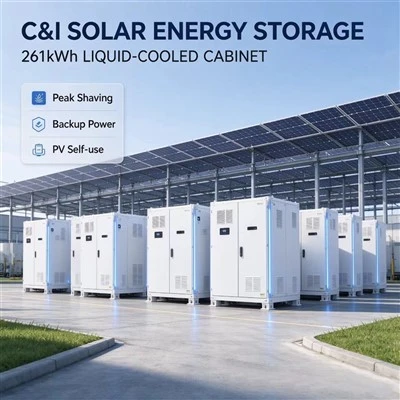
First, let’s ground this in what a power battery pack actually is, because if you don’t understand the pack itself, you can’t wrap your head around what a BMS does. Most power battery packs are made up of hundreds or even thousands of individual lithium-ion cells—small, coin-sized or cylindrical units that hold charge, arranged in series and parallel to hit the exact voltage and capacity a device needs. For example, a typical passenger EV pack might have 96 cells in series to make a 350V system, and 12 modules of 80 cells in parallel to add up to 75 kWh of energy. Each of these cells is tiny, but put them together, and you’ve got a system that can power a 2-ton car for 250+ miles, or store enough solar energy to run a small home for two days. The problem? Lithium-ion cells are finicky. If one cell gets overcharged, it can overheat, catch fire, or even explode. If it’s discharged too far, it’ll get permanently damaged and stop holding charge. And if cells are connected in parallel, a weak cell can drag down the entire pack’s performance. That’s where the BMS comes in.
Think of a BMS as the pack’s brain, nervous system, and safety officer all rolled into one. It’s not a single part—it’s a network of sensors, microcontrollers, and software that works 24/7 to keep every cell in the pack operating within its safe, efficient window. Let’s go through its core functions, because these aren’t abstract tech terms—they translate directly to how a client’s pack performs, lasts, and stays safe.
First up is cell voltage monitoring. Each individual cell in a pack has a slightly different capacity and age, even if they come off the same assembly line. Over time, some cells will degrade faster than others, and small manufacturing variations mean their starting voltages are never identical. A BMS has voltage sensors attached to every single cell, measuring their voltage hundreds of times per second. If it detects that one cell in a 100-cell string has reached 4.2V (the maximum safe voltage for most lithium-ion cells) while the others are at 4.15V, it cuts off charging to that entire string until all cells even out. Without this, that one overcharged cell would start to degrade rapidly, and over a few hundred charge cycles, it would cause the whole pack to lose range prematurely. As a pack supplier, we test this rigorously: we put our packs through 1,000 full charge-discharge cycles, and the BMS keeps cell voltage within 0.02V of each other the entire time. Clients tell us their packs still hold 90% of their original capacity after 5 years, while competitors’ packs without calibrated BMS often drop to 80% or less.
Next, temperature monitoring and thermal regulation. Lithium-ion cells have a perfect operating temperature range: between 20°C and 40°C (68°F to 104°F). Too cold, and their internal resistance spikes—charge slows down, and the pack can’t deliver power when you need it (like when accelerating onto a highway). Too hot, and as I mentioned earlier, thermal runaway becomes a risk. That’s why a BMS is packed with temperature sensors—we use one sensor per module, and sometimes two per large module, so we catch hot spots before they spread. But the BMS doesn’t just monitor temperature—it controls the pack’s thermal system. If a cell gets too hot, it can signal a liquid cooling loop or a set of fans to kick in, diverting cool air or liquid to that module. If it’s too cold, it can trigger a small heating element, or pull a small amount of energy from adjacent warm cells to warm the cold one up before charging or use. I once got a call from a client who ran a delivery van fleet in northern Minnesota; they’d switched from our packs (with our BMS) to a cheaper supplier’s in 2021, and within a year, 12 of their vans’ packs had failed in mid-winter because the cheap BMS didn’t have a heating function. Their range dropped to 30 miles in 10°F weather, and they couldn’t even charge them fully in sub-zero temps. That’s the difference a good BMS makes: it’s not just monitoring, it’s active management.
Then there’s state monitoring and estimation—state of charge (SoC) and state of health (SoH). If you drive an EV, that little number on the dashboard that says “270 miles remaining” is calculated by the BMS. It doesn’t just guess based on how much energy you pumped in; it uses data from voltage, current, and temperature sensors to estimate how much usable charge is left, accounting for things like cold weather drag, high-speed driving, or extra weight (like a full trunk of gear). State of health is even more important: that’s how the BMS tracks how much the pack has degraded over time, based on how much charge it can hold compared to when it was new. Without an accurate SoH estimate, a pack owner might think they have 50 kWh left, but really it’s only 35 kWh, leading to unexpected range anxiety. As a supplier, we calibrate our BMS’s SoC algorithm in real-world conditions: we test packs in deserts, mountains, and cold climates to make sure the estimation is within 5% accuracy, even after 5 years. That’s not something you get with a generic BMS bolted on after the fact.
Another critical function is overcurrent and short circuit protection. When you’re pulling power from a pack—like when an EV accelerates, or a solar battery is sending power to a home—you need to make sure the current doesn’t spike too high. A sudden short circuit, or trying to pull more power than the pack is designed for, can damage cells or cause a fire. The BMS has built-in circuit breakers (or communicates with external ones) that cut power instantly if current exceeds a safe threshold. We test this during pack validation: we simulate short circuits in controlled conditions, and our BMS disconnects power in less than a millisecond—too fast for any damage to occur. I’ve heard horror stories from mechanics who fixed cars without proper BMS: a driver hit a pothole, which jostled a wire, caused a short, and the pack caught fire because there was no BMS to cut power. That’s not a risk any client should have to take.
Wait, but what about balance? Cell balancing, specifically. I touched on this earlier with voltage, but it’s worth its own section. Over time, even identical cells drift in capacity. One cell might hold 3.0 Ah, another in the same string holds 2.8 Ah. If you charge the pack, the 2.8 Ah cell will hit 4.2V first, so the charger stops. That means the 3.0 Ah cell is only charged to 4.1V, so it never reaches full capacity. Over time, this imbalance gets worse, and the entire pack’s usable capacity drops. A BMS fixes this with passive or active balancing. Passive balancing is simpler: it shunts excess energy from overcharged cells as heat. It works fine for small packs, but for large, high-capacity packs, it wastes energy and generates too much heat. Active balancing, which we use for all our commercial and EV packs, is better: it transfers excess energy from a full cell to a weaker one, instead of wasting it. So that 3.0 Ah cell gets the extra charge from the 2.8 Ah cell, and the whole pack stays balanced. We’ve seen packs with active balancing last 20% longer than those with passive or no balancing—another selling point for our clients who want their batteries to hold value for years.
Now, let’s address a common myth: some clients ask, “Can’t I just use an off-the-shelf BMS from Amazon or a generic supplier?” Sure, you can. But generic BMS are designed for small, low-power applications—like a 12V battery for a golf cart, not a 400V, 100 kWh power pack for an 18-wheeler. Generic units don’t have the processing power for complex balancing algorithms, they don’t integrate with the specific battery chemistry we use (lithium iron phosphate, which is safer than other chemistries, needs specific voltage thresholds), and they don’t pass the rigorous safety certifications we require (like UN 38.3, which is mandatory for shipping lithium battery packs). We work closely with our BMS team to customize every system for our packs: we adjust voltage thresholds, temperature sensors, and balancing algorithms based on the cell type, pack size, and intended use (whether it’s an EV, a forklift, or a grid storage unit). That customization is what makes the difference between a pack that lasts 3 years and one that lasts 10.
I also want to talk about communication, because BMS don’t work in a vacuum. Our BMS integrates with the vehicle’s or system’s controller, so it can share data about the pack’s health with the user. A forklift operator can see when their battery needs to charge, before it dies mid-shift. An EV driver can set up alerts when the pack’s SoH drops below 80%, so they can plan for a replacement. A grid storage operator can monitor the pack’s performance remotely, catching a small issue (like a faulty sensor on a module) before it becomes a big problem. We even include over-the-air (OTA) updates for our BMS, so we can improve software algorithms after a pack is delivered. Last year, we had a client with 50 forklift packs; we pushed an update that adjusted the charging schedule to reduce wear, and they saw a 10% increase in pack lifespan within 6 months. That’s a service generic BMS can’t offer.
Let’s circle back to safety, because that’s non-negotiable for anyone building power battery packs. In 2022, there were over 2,000 EV fires in the U.S., according to the National Fire Protection Association—most of which were linked to improper BMS design or use. A well-designed BMS isn’t an add-on; it’s the core of the pack’s safety system. We test every single one of our BMS-equipped packs to make sure they pass thermal runaway tests, overcharge tests, short circuit tests, and vibration tests (for mobile uses). We’ve never had a safety incident with a pack we’ve delivered, and that’s because we built the BMS to do its job, not just check a box on a spec sheet.
If you’re a business owner looking for a power battery pack, or a fleet manager trying to replace aging units, the BMS is the part you should be asking about first. It’s not the most visible part of the pack, but it’s the one that determines how much range you get, how long the pack lasts, and whether it stays safe. As a supplier, we don’t cut corners on BMS, because we know our clients rely on our packs to keep their operations running—whether that’s delivering goods, powering a home, or transporting passengers.

If you’re ready to talk about a power battery pack for your specific needs—whether it’s for an EV, material handling equipment, solar storage, or another application—we’d love to connect. We can walk you through our BMS design, show you test data, and help you find a pack that fits your budget and performance requirements.
Portable Power Station References
- Liaw, B. Y., et al. (2018). “Battery Management System for Electric Vehicle Applications.” Journal of Power Sources, vol. 389, pp. 216-228.
- Zhang, L., et al. (2020). “Cell Balancing Techniques for Lithium-Ion Battery Packs: A Review.” Applied Energy, vol. 267, pp. 114952.
- National Fire Protection Association. (2023). “Lithium-Ion Battery Fire Incidents in Electric Vehicles.” NFPA Report 2023-001.
- International Electrotechnical Commission. (2021). “UN 38.3: Test Procedures for Transport of Lithium Batteries.” IEC 62281:2021.
- Liu, X., et al. (2022). “State of Health Estimation for Lithium-Ion Batteries: Methods and Challenges.” IEEE Transactions on Transportation Electrification, vol. 8, no. 2, pp. 1867-1885.
Qingdao Chenyang Electrical Technology Co., Ltd.
Qingdao Chenyang Electrical Technology Co., Ltd. is one of the most reliable power battery pack manufacturers and suppliers in China, featured by quality products and low price. Please rest assured to buy CE approved power battery pack in stock here and get pricelist from our factory. Customized orders are welcome.
Address: No.5 Yunshui 2nd Road, Jimo District, Qingdao City, Shandong Province, China
E-mail: e-sales01@chenyangmfg.com
WebSite: https://www.cyenergystorage.com/
