Hey everyone, if you’ve ever dealt with single phase induction motors (SPIMs) – whether you’re a mechanic, a small business owner, or just someone who’s had a weirdly vibrating washing machine or HVAC fan – you know that annoying jitter can turn a perfectly good machine into a headache. As a supplier of these motors, I get questions about vibration all the time, and honestly? It’s one of the most common issues folks reach out about. Today I’m breaking down why SPIMs vibrate, no stuffy textbook jargon, just real stuff that makes sense. Single Phase Induction Motor
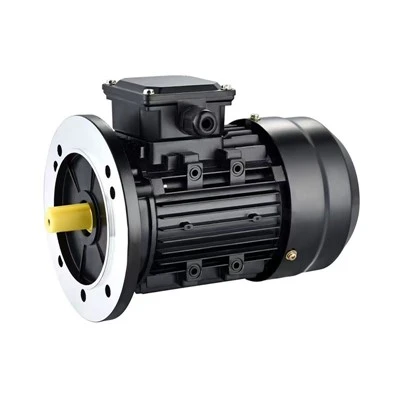
First, let’s get one thing straight: single phase induction motors aren’t like three phase ones. Three phase motors have that smooth, constant torque that makes them run like a dream. But single phase? They’ve got a single alternating current (AC) power supply feeding their stator windings, and that’s where the vibration starts sometimes. Let’s start with the big one: pulsating torque. I’m sure you’ve felt this – when the motor is running, there’s this back-and-forth twist instead of a steady push. Here’s the science behind it, simplified. The stator in a SPIM creates a magnetic field that flips back and forth 50 or 60 times a second (depending on your power grid). If you think about that, that magnetic force isn’t rotating smoothly like in three phase motors – it’s pulsing, like a kid bouncing on a trampoline instead of gliding. So when that pulsing force acts on the rotor, it makes the motor’s shaft and whole frame jitter a little. Now, why don’t all SPIMs vibrate like crazy? Because most of us use a start winding – that extra coil we add to get the rotor spinning at first – which creates a “split phase” effect, turning that pulsating field into something close to a rotating field. But even with that, there’s still a tiny bit of that pulsating torque left, especially at low speeds or when the motor’s under a light load. That leftover is enough to cause noticeable vibration if something else is off.
Next up, something that’s way more common than you think – improper alignment. I see this all the time, especially with motors used in industrial or small appliance setups. The motor is mounted to a pump, a conveyor, a fan, or whatever, and if the motor shaft isn’t perfectly lined up with the shaft of the thing it’s driving? You’ve got a vibration problem. Like, if the motor is mounted on wobbly brackets, or the coupling between the motor and the load is bent or misaligned even by a tiny fraction of a millimeter, that’s going to throw things off. I once got a call from a guy who thought his SPIM was broken because his workshop saw was vibrating so bad it was rattling the tools off the bench. Turned out, when he replaced the old blade, he didn’t re-align the motor, and it was off by like 0.2mm – that’s barely visible, but it was causing all the jitters. Alignment is such a simple thing to check, but people skip it all the time.
Then there’s rotor issues. The rotor in a SPIM is those metal bars stacked together with aluminum or copper, right? If the rotor isn’t balanced – like if one of those bars is damaged, or there’s a void in the casting, or the stack of laminations is slightly uneven – that’s going to make the motor vibrate as it spins. Think of it like a washing machine load that’s off balance – when the drum spins, it wiggles all over the place. Same idea here. Another rotor thing: air gap eccentricity. The air gap is the tiny space between the stator and the rotor. If that gap isn’t the same all the way around (like if the stator has warped a little, or the rotor shaft is bent), then the magnetic force pulling on the rotor is uneven. One side of the rotor is closer to the stator, so the magnetic pull is stronger there, and the other side is weaker. That constant uneven pull makes the motor vibrate. I’ve seen bent rotor shafts from overloading a motor – someone uses a motor for a task that’s too heavy, the shaft bends just a little, and suddenly you’ve got a vibration issue that pops up out of nowhere.
Wait, let’s not forget about bearing problems. Bearings are the unsung heroes of any motor, right? They hold the rotor in place and let it spin smoothly. But over time, bearings can wear out, get dirty, or develop little dents or pitting from friction. When bearings go bad, they create friction that causes vibration. Even new bearings can be bad – if a motor leaves our shop and has a bearing that wasn’t installed right, that’s a vibration issue before it even hits the customer. I remember a batch of SPIMs we had a while back where a new assembly team rushed the bearing installation on a couple units – the bearings were slightly misaligned, so when the motors ran, they vibrated like crazy. We caught it during our pre-shipment test, fixed it, and learned a lesson about taking extra time on that step. It’s small stuff, but it makes all the difference.
Also, let’s talk about load-related vibration. If your SPIM is working harder than it’s supposed to – like if you’re using a 1/2 HP motor to run a load that needs 3/4 HP – that’s going to cause vibration. The motor is straining to keep up, so the torque gets uneven, and that leads to jitters. Or if the load itself is unbalanced – like a fan blade with a cracked section, or a conveyor belt that’s lopsided – the motor has to work irregularly, which translates to vibration. It’s not always the motor’s fault, but as a supplier, I always ask customers about their load when they say their motor’s vibrating because 9 times out of 10, it’s something with the setup, not the motor itself.
Another thing that’s sometimes overlooked: mounting surface issues. If the motor is bolted to a surface that’s not rigid – like a flimsy plastic frame, or a workbench that’s wobbly, or a foundation that has gaps or cracks – the vibration that the motor creates can’t dissipate. It just bounces around on the weak mounting surface, making the whole unit shake. I had a customer who was using a SPIM for a small grain auger, and it was vibrating so bad he thought the motor was going to fall apart. He had it bolted to a thin wooden wall in his barn, which flexed when the motor ran. Once he reinforced the wall with a steel bracket, the vibration almost entirely went away. That’s a super simple fix, but you wouldn’t guess it until you try it.
Now, let’s get back to that pulsating torque thing I mentioned earlier, because there’s a common myth that all SPIM vibration is from that pulsating field. The truth is, pulsating torque does cause some minor vibration – that’s normal, right? All SPIMs have a little bit of that. But if you’re feeling obvious, loud vibration, that’s almost never just the normal pulsating torque. That’s when you’ve got one of the other issues: misalignment, bad bearings, an unbalanced rotor, or a bad mount. As a supplier, I always tell customers not to panic if their new SPIM has a tiny bit of buzz when it runs – that’s just the physics of single phase motors. But if it’s shaking so hard it moves across the floor, that’s a problem that needs checking.
Let me give you an example of a time that came up recently. A customer reached out saying their HVAC motor was vibrating so bad it was making the ducts rattle. They thought it was a defective motor they bought from someone else, so they were going to return it. I asked a few questions: was it installed on a rigid mount? Was the fan blade balanced? Turned out, the previous supplier had sent a motor that was correct, but the HVAC technician they hired didn’t balance the fan blade when he replaced the motor. The blade had a tiny weight imbalance, so every time it spun, it pulled on the motor shaft, causing vibration. We walked them through balancing the blade themselves in 10 minutes with a $10 balance kit, and the problem was gone. That’s a classic case of the motor not being the issue, but it still made the customer think SPIMs are all vibrating messes.
As a SPIM supplier, my job isn’t just to sell motors – it’s to help customers figure out why their motors are acting up, even when they didn’t buy from me. I’ve had people reach out with questions about their old motors that they’ve had for years, and it’s usually something simple. The science behind the vibration is real, but most of the time, it’s not the motor itself that’s broken. It’s the setup, the installation, wear and tear on parts like bearings, or even an unbalanced load.
Wait, let’s also touch on something for the folks who are into their own repairs. If you’ve got a vibrating SPIM, here’s a quick checklist to run: first, check alignment between the motor and the load. Use a dial indicator if you’ve got one, or just a straight edge to line up the shafts. Next, check the bearings – listen for grinding noises, or feel for play in the shaft when it’s off. Then, check the mounting: is it bolted tight? Is the surface it’s on sturdy? If it’s a fan or something with blades, take the blades off and check for cracks or balance issues. Most of the time, that covers 90% of common vibration problems.
At the end of the day, single phase induction motors are super common – in appliances, small industrial equipment, HVAC, everything – so vibration is a pain point that almost everyone deals with. The science makes sense: pulsating torque from the single phase supply, mechanical issues from alignment, bearings, rotors, mounts, and loads all contributing. As someone who’s been supplying these motors for years, I’ve seen all of it – the small fixes, the big mistakes, the times a customer blames the motor when it’s totally their setup.
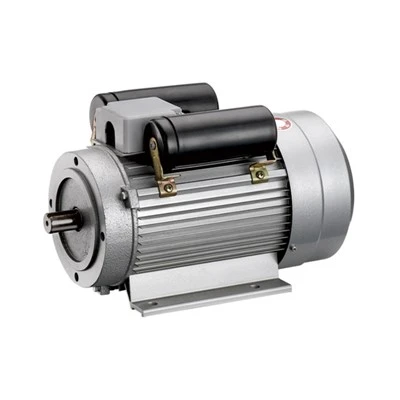
If you’re dealing with a vibrating SPIM, whether you’re here because you bought one from me or another supplier, or you’re just in the market for a new motor, feel free to reach out to talk through what’s going on. I can help you diagnose the issue, point you in the right direction, or supply a reliable SPIM that’s built to run smooth with minimal vibration when installed correctly. Don’t let a little shake turn into a bigger headache – let’s work through it together.
Three Phase Induction Motor References
- Fitzgerald, A. E., Kingsley, C., & Umans, S. D. (2003). Electric Machinery (6th ed.). McGraw-Hill.
- Boldea, I., & Nasar, S. A. (1999). The Induction Machine Handbook. CRC Press.
- Alignment and Balancing Best Practices for Electric Motors. (2021). National Electrical Manufacturers Association (NEMA).
Zhejiang Rensu Motor Technology Co., Ltd.
As one of the most professional single phase induction motor manufacturers and suppliers in China, our products have good reputation in the market. We warmly welcome you to wholesale bulk durable single phase induction motor made in China here from our factory. Customized orders are welcome.
Address: Rensu Motor, Building 25, Huifeng Technology Industrial Park, Luqiao District, Taizhou City, Zhejiang Province
E-mail: info@rensumotor.net
WebSite: https://www.zhejiangrensumotor.com/
