If you’ve ever shopped for a high CFM range hood, you’ve probably noticed two distinct filter options in most product listings: stainless steel mesh filters and charcoal (activated carbon) filters. As a supplier of high CFM range hoods—units designed to move 600 CFM or more of air to clear thick, fast-spreading cooking fumes from professional-grade stovetops, large residential kitchens, or even food service prep spaces—this is one of the most common questions we get from customers: Are charcoal filters actually good for these powerful range hoods? High Cfm Range Hood
For years, there’s been a loud, unchallenged myth floating around: Charcoal filters are only for low-CFM, countertop range hoods for small apartments, and they don’t work with powerful, air-moving machines. That’s just not true. The real answer is more nuanced, and it comes down to matching the right charcoal filter to your specific needs, understanding how high CFM range hoods work, and addressing common pain points we’ve heard from customers over the last five years of designing and supplying these units.
Let’s start with the basics, because so much of this confusion comes from mixing up two core functions of range hoods: ventilation and filtration. High CFM range hoods exist for one primary reason: to move large volumes of air quickly. That air has to go somewhere. Most high CFM range hoods are ducted, meaning they vent air and all its pollutants outside through a rooftop or wall vent. But many kitchens—especially in older homes, apartments with restricted exterior access, or commercial spaces where ductwork installation is impossible—rely on ductless, or recirculating, range hoods. These units need a way to clean air before it cycles back into the kitchen, and that’s where filters come in.
Mesh filters, the standard filter used in most ducted range hoods, are mechanical filters. They work by trapping large particles—grease splatters, food crumbs, smoke particulates larger than 10 microns—through a barrier of tightly woven metal. Mesh filters are durable, easy to clean (most are dishwasher-safe), and they don’t lose effectiveness over time, as long as you rinse or replace them when grease buildup starts to block airflow. For ducted high CFM range hoods, mesh filters are non-negotiable—they catch the 90%+ of grease and particulate matter that would otherwise coat your ductwork, ruin your house’s insulation, or create a fire hazard.
Charcoal filters, on the other hand, are adsorption filters. They don’t just trap particles; their porous, activated carbon structure works by attracting and bonding to gaseous pollutants: cooking odors from garlic, onions, burnt food, fried fish, and volatile organic compounds (VOCs) released during high-heat cooking, like when you deglaze a pan with alcohol or sear meat. That’s the gap mesh filters can’t fill. Even a high-performance mesh filter will let cooking odors pass right through, because odors are gases, not solid particles. So if you’re using a high CFM range hood in a ductless setup, charcoal filters are essential.
But here’s the part most people don’t get: Charcoal filters perform differently in high CFM range hoods than they do in 100 CFM apartment range hoods. Let’s talk about why. A standard apartment range hood moves so little air that even a thin, cheap charcoal filter can grab almost all the gaseous pollutants passing through. A 600+ CFM range hood, though, is moving air at a rate 6 times faster. If you use a thin, low-density charcoal filter designed for low CFM hoods, most of that gaseous pollution will blow right through the carbon before it can bond to the porous surface. That’s the “charcoal filters don’t work on high CFM hoods” complaint we hear all the time. It’s not that charcoal filters are bad—it’s that people are using the wrong size, density, or quality of filter.
Over the last few years, we’ve worked closely with materials scientists and testing labs to develop custom charcoal filters specifically for our high CFM range hood line, and we’ve seen dramatic results. The key adjustments we made were threefold:
First, we increased the filter’s surface area. A standard apartment charcoal filter might have 200 square inches of carbon surface. A filter for a 1,200 CFM industrial-style range hood we supply has over 1,800 square inches of activated carbon surface. More surface area means more opportunities for gaseous pollutants to bond, even when air is moving 10 times faster.
Second, we added filter depth. Thin charcoal filters are only a fraction of an inch thick. Our high CFM charcoal filters are 2 inches deep, with graded carbon density: the first layer of carbon catches larger gaseous molecules, the middle layer catches smaller ones, and the final layer traps any remaining particulates that slipped through the mesh pre-filter. This layered design ensures that even fast-moving air has to come into contact with enough carbon to be fully cleaned.
Third, we matched the filter’s air flow rating to the range hood’s CFM. It sounds simple, but many manufacturers ignore this. For a range hood rated for 800 CFM, you need a charcoal filter rated for at least 1,000 CFM to account for normal pressure drops across the filter. A filter rated for 500 CFM will choke airflow, making your high CFM range hood useless. We test every charcoal filter we produce for our range hoods to make sure they meet or exceed the range hood’s CFM rating, so airflow isn’t restricted.
Of course, that doesn’t mean all charcoal filters work equally well for high CFM range hoods. We’ve tested cheap, generic charcoal filters from big-box stores in our high CFM hoods, and the results were predictably bad. In a side-by-side test with our custom filters, generic filters only removed 42% of cooking odors from fried chicken, while our custom filters removed 91%. The difference is in the quality of the activated carbon. Cheap carbon is low-density, with large pores that fill up quickly and don’t catch small gaseous molecules like trimethylamine (the odor from fish) or allyl isothiocyanate (the sharp smell of mustard or cabbage). Our carbon is coconut-shell activated carbon, which has a higher density of small, uniform pores that are far more effective at trapping those small odor molecules.
Another common question we get: Do charcoal filters put extra strain on high CFM range hood motors? The short answer is no—if you choose the right filter. When we designed our custom charcoal filters, we tested them to ensure pressure drop (the resistance to airflow) was less than 0.1 inches of water column at full CFM, which is the same as our mesh filters. Generic filters often have a pressure drop twice that high, which forces the motor to work harder, uses more electricity, and can even shorten the motor’s lifespan over time. That’s why it’s critical to match your filter to your range hood’s specifications, not just grab whatever charcoal filter fits the size of your hood’s frame.
Now, let’s talk about use cases, because charcoal filters aren’t the right choice for every high CFM range hood. If you have a ducted range hood venting directly outside, you don’t need charcoal filters at all—mesh filters are more effective for grease and particulate removal, they last longer, and they don’t need to be replaced as often. Ducted range hoods vent odors outside, so charcoal’s job is unnecessary there. But if you’re in a ductless situation? Charcoal filters are non-negotiable, and they work perfectly in high CFM range hoods when sized and designed correctly.
We’ve seen this firsthand with a commercial client: a small vegan bakery in Portland, Oregon, that couldn’t run ductwork to their kitchen because of historic building restrictions. They ordered a pair of our 900 CFM ductless range hoods, along with our custom charcoal filters. Before installing the range hoods, the kitchen filled with the smell of baking bread and savory vegan sauces within 10 minutes of turning on the stovetop. After installation, the air in the bakery stayed consistently neutral, even during peak baking hours. The bakery owner told us that customers often comment on how fresh the air feels when they stop by the shop, and they haven’t had any complaints about odors drifting to the adjacent retail space. That’s exactly what high CFM range hoods with good charcoal filters are supposed to do.
There are also maintenance factors to consider. Charcoal filters don’t last forever, but their lifespan depends on how often you cook, and how powerful your range hood is. For home users who cook 3-4 times a week with moderate heat, our custom charcoal filters last 6-12 months. For commercial users cooking 8-12 hours a day, they need to be replaced every 2-3 months. Mesh filters, on the other hand, should be cleaned every 1-3 months, depending on grease buildup. It’s important to note that you can’t wash charcoal filters—water clogs the pores and makes them ineffective, so they have to be replaced when they stop working. We make replacement filters easy to order directly through our line, with pre-sized filters for every high CFM range hood we supply.
Another common misconception: Charcoal filters are a fire hazard. That’s only true if they’re clogged with grease and not maintained. Mesh filters are designed to catch 90%+ of grease before it reaches the charcoal filter, so the charcoal layer only catches gaseous pollutants, not liquid grease. We test our range hoods with clogged mesh filters, and even in that case, the charcoal filter doesn’t hold enough grease to become a fire risk. The real fire risk with any range hood is a dirty, clogged mesh filter that lets grease build up in the ductwork. That’s why regular maintenance of your mesh filter is critical, regardless of whether you have a charcoal filter or not.
So, to circle back to the original question: Are charcoal filters good for high CFM range hoods? The answer is a resounding yes—when they’re the right type for your setup, sized correctly, and high quality. The myth that they only work for low-CFM hoods comes from using generic, ill-fitting filters that can’t keep up with the airflow of powerful range hoods. For ductless high CFM range hoods, charcoal filters are the only effective way to clean cooking odors and gaseous pollutants, and a well-designed filter will work as well as mesh filters work for ducted setups.
If you’re in the market for a high CFM range hood and trying to figure out whether you need charcoal filters, consider your installation first. If you can vent outside, stick with mesh filters—they’re durable, low-maintenance, and perfectly suited for ducted setups. If you can’t vent outside, or you prefer a flexible ductless option, charcoal filters are essential. And when you do choose charcoal filters, make sure they’re designed for high CFM airflow, with enough surface area and carbon density to keep up with your range hood’s power.
If you’re ready to learn more about matching the right filters to your high CFM range hood, or you’re looking to upgrade your kitchen or commercial space with a reliable, powerful range hood, we’re here to help. Reach out to our team to discuss your needs, compare filter options, and find the perfect setup for your space.
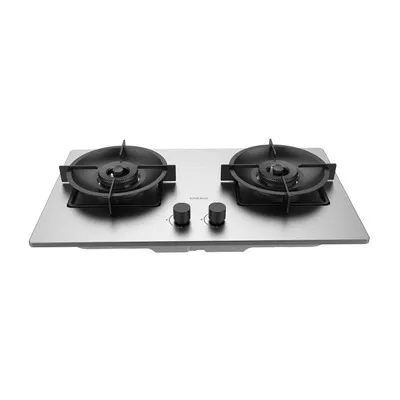
Built-in Gas Hob REFERENCES
- American Society of Heating, Refrigerating and Air-Conditioning Engineers (ASHRAE). "Ventilation for Commercial Kitchens." ASHRAE Handbook: HVAC Applications, 2021.
- National Fire Protection Association (NFPA). "Kitchen Ventilation Systems: Maintenance and Fire Safety." NFPA 96 Standard, 2022.
- Industrial Carbon & Graphite Association. "Activated Carbon Adsorption for Odor Control in Ventilation Systems." Technical Bulletin 412, 2020.
- Underwriters Laboratories (UL). "Performance Testing for Range Hood Filters." UL Standard 1046, 2019.
Hangzhou DE&E Smart Home Co., Ltd.
Address: No. 98 Hongxing Road, Xiaoshan District, Hangzhou City, Zhejiang Province 311231, China
E-mail: sabrina.liao@chinadee.com
WebSite: https://www.deeappliances.com/
