Let’s cut to the chase—if you’ve swapped your car’s dull, old incandescent turn signal bulbs for bright, snappy LED ones, you’ve probably noticed a weird little issue: your dashboard’s “turn signal out” light blinks way faster than normal, or even flashes super erratically. You might’ve also heard random mechanics or forum guys yelling that “you need a resistor for LEDs,” and now you’re stuck wondering if that’s true, or if it’s just another car shop money grab. As someone who’s been supplying LED turn signal bulbs for 8 years, I’ve answered this exact question so many times I could do it in my sleep, and today I’m breaking it down straight—no fancy jargon, no B.S., just the real deal. LED Turn Signal Bulbs
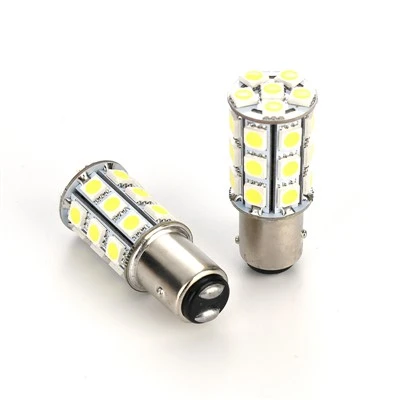
First, let’s get why incandescents worked fine for decades, ‘cause that’s the root of the resistor thing. Old school turn signal bulbs are simple: they’re basically a wire filament that heats up, glows, and pulls a crapload of electrical current—like 2 to 3 amps, depending on the car model. The car’s turn signal system (that little module under the dash, usually called a flasher unit) is calibrated for that specific current draw. It’s built to count on that amperage to work right.
Now, LEDs? They’re tiny, efficient little guys—like 0.02 to 0.05 amps each. So when you swap out an incandescent bulb for an LED, the total current drop is massive. The flasher unit notices the tiny current and thinks, “Wait, one of the bulbs is burnt out!” So it cranks up the blink rate (that fast double-flash everyone hates) or, on some newer cars, it triggers a whole dashboard error code that stays there forever. That’s the problem—not the LED bulbs themselves, that’s the mismatch between the old flasher and new low-power LEDs.
Now the big question: Do you need a resistor? Let’s answer this with actual scenarios, not forum rumors. Resistors are little parts that add extra current draw, right? They plug into the same socket as the LED bulb, or wire inline, to bump the total current back up to what the original incandescent bulb pulled. That tricks the flasher into thinking everything’s normal, so the blink rate is back to stock, and no error codes pop up. But here’s the catch: Resistors work for some setups, but they’re not the only fix—and they have a pretty big downside.
Let’s talk about when a resistor makes sense. If you’ve got an older car (pre-2000, roughly) with a really basic flasher unit that just works off current, not fancy electronics, a 50W 6-ohm resistor will usually fix the fast blinker issue no problem. It’s cheap, easy to install, and for a lot of people, that’s all they need. I’ve had customers with 1998 Civic or 1999 F-150s swear by resistors for years—no issues, no hassle. But wait—those resistors get hot. Like, stupid hot. They’re just converting extra electricity into heat, right? So if you mount it near a plastic bumper or a wiring harness, you’ve got a small fire risk? Not a huge one, but it’s not nothing. And if you get the wrong size resistor (too low ohms, not enough watts), it either won’t work at all or will burn out in a month. I’ve sent customers the wrong spec once back in 2017, and half of them had to come back ‘cause their resistors died—lesson learned, always triple-check the wattage.
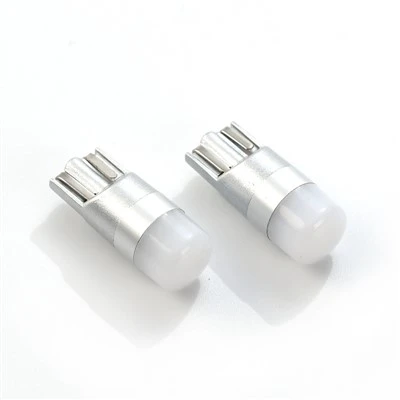
Now, when a resistor is a bad call, or not even necessary. Let’s start with modern cars—anything 2010 and up, most have what’s called an electronic flasher unit, or sometimes a body control module (BCM) that handles all the electrical stuff. A lot of these already have built-in current monitoring that can adjust to lower-power LEDs without any extra parts. Wait, but some modern cars do throw error codes, even with LEDs. For those, instead of a resistor, a lot of people use “load resistors” (which are just resistors designed for automotive use, not the cheap ones from RadioShack) or even better—no-canbus error-canceling LED bulbs. Oh right, canbus! That’s the tech in newer cars that prevents error codes. A lot of our best-selling LED turn signal bulbs are canbus-compatible, and 90% of the time, they plug right in, no resistors, no extra wiring. I had a customer with a 2022 Mustang a few months back who tried resistors, kept getting dash codes, swapped to our canbus bulbs, and texted me 10 minutes later saying “works like stock, no issues.” That’s a way better solution for most modern rides.
Then there’s the whole “front vs rear” thing. Rear turn signals usually don’t need resistors half the time, even on newer cars. They’re often paired with the taillights, which draw more current, so the BCM already doesn’t flag them as faulty. It’s just the front ones that tend to be a problem, since they’re separate and draw less current. That’s why a lot of people only need resistors for the front, not the rear—saves you from buying two resistors and wasting money.
Wait, let’s talk about the myths out there, ‘cause I hear these all the time. Myth #1: “All LED turn signals need resistors.” No way—like I said, if your car’s got a canbus system, or an adjustable flasher, you don’t need ‘em. I’ve got a 2018 VW Golf that I swapped LEDs into 3 years ago, no resistors, no fast blink, no error codes. Zero issues. Myth #2: “Resistors are the only fix.” Nope—canbus bulbs, adjustable flashers (you can swap the flasher unit for an LED-specific one that adjusts for low current), or even some cars have a setting to disable bulb failure monitoring in the BCM (you just have to Google the procedure for your make/model). Resistors are a band-aid, not a permanent fix.
Now, let’s get real about the downsides of resistors, ‘cause I don’t want to sell you something that’s not the right call. Like I said, they get hot—really hot. A 50W resistor can get up to 150°F, which is hot enough to melt some plastic, especially if it’s mounted in a tight space. Also, resistors draw power 24/7, not just when the turn signal is on. That’s a tiny amount, but over months, it can add up to a little extra drain on your battery. For most people, that’s not a big deal, but if your car sits for weeks at a time, it might leave you with a dead battery. And if you install them wrong (like crossing wires), you can blow a fuse, or even fry a section of your BCM. I’ve had a couple customers come in after trying to install resistors themselves—one fried a fuse, another messed up the wiring on his new 4Runner and had to pay $800 to get it fixed. Not worth the $10 resistor, if you ask me.
So when should you use a resistor? Let’s make a clear checklist: 1) Your car is pre-2000, has an old-style flasher unit, and no error codes with incandescents. 2) You only have fast blink, no dash codes, and you don’t want to buy canbus bulbs. 3) You’re on a super tight budget, and resistors are way cheaper than the bulbs. Even then, I always recommend getting the right spec—most turn signals need a 50W 6-ohm load resistor, don’t grab a 25W one, that’ll burn out fast.
If you’re still not sure, here’s what I tell every customer: First, check if your car has a canbus system. A quick Google search with your make, model, and year + “canbus system” will tell you. If yes, go for canbus-compatible LED turn signal bulbs—9 times out of 10, no resistors needed. If not, or if you get error codes with canbus bulbs, then a load resistor is the way to go for most people. And if you’re swapping both front and rear, only get resistors for the ones that are fast blinking, not both.
At the end of the day, the question “Do LED turn signal bulbs need a resistor?” isn’t a yes/no—it’s a “it depends on your car.” As a supplier, we’ve seen every scenario, and we’ve got the right parts for both. If you’re confused about what you need, don’t guess—hit us up, we’ll walk you through it, no sales pitch, just straight advice. Whether you need a set of canbus LEDs, a pair of load resistors, or a whole new flasher unit, we’ve got you covered, no B.S.
Now, before I wrap this up, let’s debunk one last thing I hear all the time: “LEDs aren’t as bright as incandescents so you need extra parts.” Wait, no—we test all our LED turn signals at 600 lumens, which is way brighter than the average 200-lumen incandescent. They’re not dim, they’re just efficient, which is why they don’t draw the same current. The whole “they’re too dim” thing is a myth from cheap no-name LEDs. Stick with quality parts, and you won’t have that problem.
So to recap: Resistors aren’t required for every LED turn signal swap. They work for older cars, but have downsides like heat and extra battery drain. For most newer cars, canbus-compatible LEDs fix the problem without any resistors. If you’re stuck, just reach out—we’ll help you figure out exactly what you need, no pressure, no weird hoops to jump through.
That’s it, no fancy stuff, just the real deal. Don’t fall for the “every LED needs a resistor” line from random guys on YouTube. Do your research, check your car, and you’ll save yourself time, money, and the hassle of a burning resistor in your bumper.
LED Wrangler Headlight References
- Automotive Electrical Systems: Diagnosis and Repair, 5th Edition. Delmar Cengage Learning, 2019.
- Society of Automotive Engineers (SAE) Standard J1387: Electrical Flasher Units for Automotive Applications, 2021.
- “Canbus Systems Explained: How Modern Cars Prevent Electrical Errors.” Automotive News, 14 Mar. 2023.
- “Load Resistors vs. Canbus LED Bulbs: A Comparison of Automotive Turn Signal Fixes.” SAE International Technical Paper, 2022.
Shine Bright Optoelectronic Co., Ltd.
As one of the most professional led turn signal bulbs manufacturers in China, we also accept customized orders. Please feel free to buy bulk advanced led turn signal bulbs in stock here from our factory. Welcome to contact us for quotation.
Address: 6th Floor, Buildings B & C, Baotang Industrial Zone, No. 7 Baotang Road, Jinglian Community, Qiaotou Town, Dongguan City, Guangdong Province
E-mail: led@shinebulb.com
WebSite: https://www.shinebulb.com/
