If you’re running a PVC pipe production line, whether it’s a small shop churning out 2-inch irrigation pipes or a mid-sized facility making 12-inch sewer lines, your PVC pipe machine is the backbone of your whole operation. Let’s be real—when that machine goes down unplanned, you’re looking at lost deadlines, pissed-off clients, and a ton of overtime to scramble to fix it. As a supplier who’s been on the ground with dozens of production teams over the last decade, I’ve seen way too many folks brush off small red flags that later turn into $10k+ repair bills and weeks of downtime. This isn’t some fancy engineering whitepaper, it’s the stuff I’ve picked up listening to frontline operators and plant managers, so let’s cut the fluff and talk about the actual, actionable signs your PVC pipe machine needs maintenance, not just a “quick tune-up.” PVC Pipe Machine
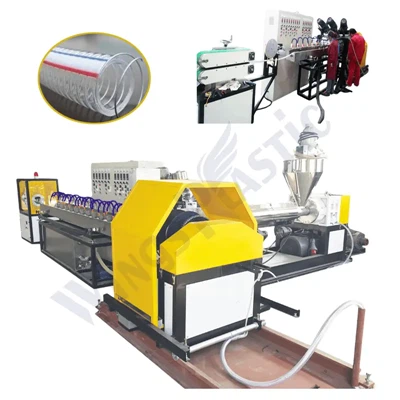
First off, let’s start with the most obvious but most ignored sign: inconsistent pipe dimensions. I had a client last year, a guy running a small agricultural supply shop in Iowa, who thought his pipe was “just a little off thickness” because his raw PVC resin was a bad batch. Turns out, he’d been running the machine 12 hours a day, 6 days a week, without checking the extrusion die. The die rings on a PVC pipe machine—those circular parts that melt and shape the molten PVC into pipe—wear out over time, specifically the inner and outer rings that control wall thickness and outer diameter. When the die starts to warp or get small scratches, you’ll see pipes that vary by 10-15% in wall thickness across a single length. At first, it’s barely noticeable, but after a few hundred feet, it becomes a problem: thin spots will leak under pressure, thick spots throw off your cut lengths, and you’ll waste 20-30% more PVC than you should because you’re trimming off uneven ends. Pro tip from the field: if you’re measuring pipe wall thickness every hour and seeing more than a 5% swing, don’t wait for a huge batch of bad product—call for a maintenance check, and maybe a die resurfacing or replacement.
Next up: weird sounds and vibrations that weren’t there before. This is the machine’s way of screaming for help, but most operators just turn up the radio or crank up the AC to drown it out. I’ve heard everything from high-pitched squeals that make your teeth hurt to deep, rumbling vibrations that rattle tools off the workbench. Let’s break those down: a high-pitched squeal when the extruder (the part that melts the PVC resin) is running usually means the screw in the extruder barrel is getting worn. When the screw’s threads get smooth from years of pushing molten PVC through the barrel, it doesn’t mix the resin evenly anymore, and that’s why you get those squeals. The deep rumbling? That’s usually a worn bearing in the haul-off unit—the part that pulls the newly formed pipe through the cooling tanks. If the haul-off bearings go bad, the line pulls unevenly, so the pipe twists or bends while it’s still soft, leaving you with a wonky pipe that can’t be cut straight. Another one: knocking sounds when the cutter blade comes down to slice the pipe to length. That’s almost always a dull cutter blade or a misaligned cutter head. Dull blades don’t slice through PVC, they tear it, leaving rough edges that can leak, and if you keep running a dull blade, you’ll damage the cutter mechanism way worse than just swapping the blade.
Third sign: inconsistent material flow and surface defects on the pipe. This shows up as everything from tiny specks on the pipe surface to the pipe looking “cloudy” or having small pits, even if you’re using brand-new, unadulterated PVC resin. I had a plant manager in Texas last year who was blaming his resin supplier for everything, and it turned out his screen changer (the part that filters out contaminants from the molten PVC) was completely clogged. The screen changer has a fine mesh screen that catches tiny bits of degraded PVC or leftover material from previous runs, and if you don’t change those screens on schedule, the flow gets blocked, so you get all those surface defects. Another flow issue: the extruder motor drawing more amps than it should. If you’re monitoring your machine’s power usage (most modern machines have basic dashboards for this), a spike in amp draw—say, from 60 amps to 75 amps while running the same line speed—means the extruder is working way harder than it needs to push the PVC, which is a sign of worn screws, blocked screens, or even a clogged cooling line on the extruder barrel.
Don’t sleep on the cooling system either—cooling is make-or-break for PVC pipes, because PVC needs to be cooled evenly as it exits the die to keep its shape. If the cooling tanks aren’t keeping consistent water temperature, you’ll get pipes that cool unevenly, leading to warping, or soft spots that bend under pressure. I worked with a municipal pipe supplier once who was getting complaints that their 8-inch sewer pipes were “curving weird” when they buried them. Turns out, one of the cooling tank inlet valves was stuck, so only half the tank had cold water, and the other half was lukewarm. The pipe cooled faster on the cold side, so it curved as it solidified. Most machines have temperature sensors on the cooling tanks, but if you’re not checking those, or if the sensors are dirty and giving false readings, you’ll miss this until you have a pile of bad pipe ready to go out.
Another big one: misaligned components that you can see without taking the machine apart. This might sound basic, but I’ve seen so many operators get complacent. The die, the haul-off unit, the cutter, and the pipe cutting table all have to be perfectly aligned for the machine to run right. If you look at the die and it’s tilted to one side, or the haul-off rollers aren’t sitting level, you’ll get off-center pipe, twists, or even the pipe rubbing against the side of the cooling tank, causing scratches. Most of the time, misalignment happens because the machine gets jostled a little from running hard, or parts wear a tiny bit over time, so it slips out of whack. You don’t need a fancy laser alignment tool (though those help) to check this—just run a scrap length of pipe, hold it up next to a straight edge, and see if it’s even all the way along. If it’s not, that’s a sign you need to call in a maintenance tech to realign everything before you waste more material.
Wait, let’s talk about something that’s easy to miss, especially if you’re running a shift by yourself: increased downtime for small, random fixes. Like, you’re stopping every few hours to adjust a wobbly roller, or you’re tightening a loose bolt on the extruder, or the cutter is jamming every time you run a thick wall. Those small stops add up fast—if you’re spending 15 minutes every hour messing with little fixes, that’s 2 hours a shift you’re not producing pipe. As a supplier, I can tell you that most operators brush these off as “just part of running an old machine,” but those little issues are almost always signs of bigger underlying problems that will lead to full breakdowns later. I had a client last year who put off fixing a wobbly haul-off roller for 3 months, and that tiny issue ended up cracking the gearbox, costing him $8k in parts and 10 days of downtime while we ordered and installed a new one. That $50 roller bearing could have been swapped in 10 minutes for less than $100.
Also, let’s address the “I’ll wait till the line stops completely” trap. A lot of guys I work with think if the machine is still moving, even with weird sounds or off pipe, they can keep running it. But PVC pipe production is a precision process—even a tiny maintenance issue will snowball. For example, a worn extruder screw might not sound like a big deal at first, but over time, it won’t mix the resin properly, so the pipe will have uneven strength, which means it can crack under pressure or when being installed. That’s a huge liability—you could end up with a field full of cracked pipes, no matter how careful your installation crew is. Or, if the cooling system is off, the pipe might be soft enough to bend when it’s coiled, leading to bent coils that can’t be shipped or used.
Now, I know a lot of you are running tight budgets, and maintenance can feel like an extra cost you don’t want to splurge on upfront. But here’s the thing: unplanned downtime costs way more than a scheduled maintenance check. Let’s do a quick math: if your machine produces $1,500 worth of pipe an hour, and you go down for 8 hours because you ignored a squealing extruder, that’s $12k in lost revenue, plus overtime to make up for it, plus repair parts that cost way more than a tune-up. A scheduled maintenance check every 3-6 months (depending on how many hours you run the machine) is way cheaper than fixing a major breakdown.
I’ve seen too many production teams lose clients or go out of business because they put off small maintenance signs. The good news is, most of these issues are easy to catch if you’re paying attention—you don’t need a PhD in mechanical engineering to check pipe dimensions, listen for weird sounds, or monitor your power usage. If you’re noticing any of these signs, don’t wait. You don’t have to stress about finding the right tech either—we’ve got trained service teams that work with all types of PVC pipe machines, and we can come to your facility, diagnose the problem, and get you back up and running fast. Whether you need a simple tune-up, die resurfacing, bearing replacement, or a full system check, we’re here to help you avoid that unplanned downtime that kills your bottom line.
At the end of the day, your PVC pipe machine is an investment—treating it with small, regular maintenance checks will keep it running smoothly for years, save you money in the long run, and keep your production on track. If you’re not sure if what you’re seeing is a minor issue or something bigger, just reach out. We’re here to help you keep your line moving, no pressure, no confusing sales pitches. Just real advice from people who work with these machines every single day.
Plastic Corrugated Pipe Machine References
PVC Pipe Manufacturing: Process, Materials, and Maintenance. Plastics Industry Association, 2022.
Extrusion Equipment Maintenance Best Practices. Society of Plastics Engineers, 2021.
Common Failure Modes of PVC Extrusion Lines. Journal of Plastic Film & Sheeting, vol. 37, no. 4, 2021, pp. 321-338.
Qingdao Wings Plastic Technology Co., Ltd.
As one of the most experienced pvc pipe machine manufacturers and suppliers in China, we also support customized service. Please feel free to buy durable pvc pipe machine made in China here from our factory. For price consultation, contact us.
Address: C02 Of Anshengyi Road, No.2 Fuan Industry Zone,Jiaodong Town, Jiaozhou City, Qingdao City, Shandong Province,China
E-mail: kelly@wingsplastic.com
WebSite: https://www.wingsextruder.com/
