If you’ve ever stood in a manufacturing plant mid-shift, watching process lines hum, fumes and vapors getting pulled away without a hitch, chances are a water ring vacuum pump is doing the heavy lifting. As a supplier who’s spent 12 years selling, troubleshooting, and standing behind these pumps, I’ve lost count of how many times customers call in frustrated—they bought the wrong stage configuration for their application, and now they’re dealing with low performance, wasted water, or unexpected downtime. That’s why today I’m breaking down when to pick a single-stage vs. a two-stage water ring vacuum pump, straight from the shop floor and the test beds we run every week. Water Ring Vacuum Pump
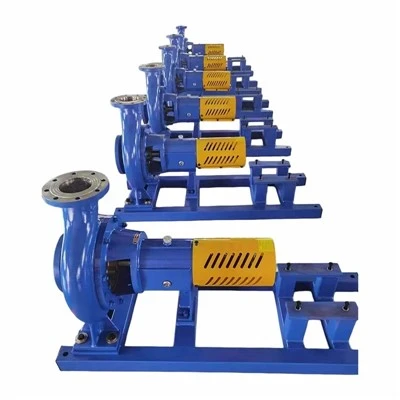
First, let’s cut through the jargon that clogs a lot of pump specs. A water ring vacuum pump works by spinning an impeller inside a cylindrical casing, with water forming a tight, rotating ring that acts as the seal. The number of stages refers to how many of these compression cycles happen inside the pump housing before the air or gas exits. Single-stage pumps complete one compression, two-stage pumps run two sequential compressions, so they can pull much deeper vacuums. But deeper vacuums aren’t always better, and forcing a two-stage pump on a job that doesn’t need it is just wasting your money on higher upfront costs and more complex maintenance.
Let’s start with single-stage pumps, because they’re the workhorse for 60% of the applications we serve. I see most people jump to two-stage pumps thinking “more is better,” but here’s the first rule: single-stage is the right pick when your required vacuum level is 15 to 28 inches of mercury (inHg), or roughly 50 to 95 kilopascals (kPa) below atmospheric pressure. That range covers a huge swath of common industrial tasks, so let’s go through the scenarios where we consistently recommend single-stage first.
If you run a packaging line, especially for food or pharmaceuticals, that’s a single-stage job. Many vacuum sealers operate in that 20 to 25 inHg range, which is exactly where single-stage pumps shine. We recently had a customer in Indiana who made frozen pizza packages—he initially bought a two-stage pump because his line manager heard “more vacuum = better seal.” Within a month, he was on the phone complaining that the pump was using twice as much water as it should and breaking its mechanical seal every three weeks. We swapped him for a single-stage, and he cut water usage by 40% and seal failures by 90%. The two-stage was overkill: his seal only needed 22 inHg, which the single-stage delivered easily without the extra work of a second compression.
Another big single-stage use is liquid transfer for low-pressure processes. Think of chemical processing where you’re moving solvents that don’t off-gas heavily at moderate pressures, or in bottling plants where you’re pulling air out of glass bottles before filling. Bottling, in particular, uses vacuum to make sure bottles are properly sealed and free of contaminants—most beverage brands operate right in that 22 to 27 inHg sweet spot for that, so single-stage pumps are standard here. They’re also smaller, lighter, and easier to install in tight spaces on a production floor. When we have a customer who’s retrofitting an old line and doesn’t have extra floor space, single-stage is the obvious call; two-stage pumps take up 30% more footprint for the same flow rate, which can mean rearranging your entire line just to fit it.
Single-stage pumps also win when you’re handling wet or contaminated gasses, which is super common in applications like paper pulp manufacturing, where you’re pulling air mixed with pulp slurry, or in concrete curing, where water vapor and small amounts of cement dust get pulled through the pump. The single-stage design has larger passages between the impeller and casing, so those solid particles and liquid droplets don’t get clogged as easily. I remember a pulp and paper client in Alabama who was using a two-stage pump for their dewatering process. The fine pulp fibers kept getting trapped in the gap between the two compression stages, causing the pump to seize up every two weeks. Swapping to a single-stage pump with wider clearances fixed that; he’s now only pulling the pump apart for annual maintenance, not every other shift. That’s a huge win for uptime in a plant that runs 24/7.
Now, let’s talk about when two-stage pumps are non-negotiable. If your application needs a vacuum level deeper than 28 inHg, or below 95 kPa absolute pressure, you need two-stage. Think of processes where you need to pull almost all air out of a sealed system, and the remaining gas is just tiny amounts of low-pressure vapor that a single-stage can’t compress enough to push out. The most common example here is freeze drying, or lyophilization. Pharmaceutical manufacturers use freeze drying to preserve drugs, vaccines, and biological samples—they lower the pressure so much that water sublimates directly from ice to vapor, without melting the product. That process usually requires vacuums in the 29 to 29.9 inHg range, right at the edge of what a two-stage pump can deliver. We supply two-stage pumps to three major vaccine manufacturers in the Midwest for their final freeze drying steps, and they wouldn’t trust a single-stage here—if the vacuum drops even half an inch, the product quality is compromised, and they have to scrap entire batches.
Another key two-stage use is in vacuum distillation for chemical and petrochemical processing. When you need to separate liquids with very close boiling points, you lower the pressure to drop the boiling point of each component, so they vaporize at different temperatures. For example, refining specialty solvents or essential oils often requires vacuums below 28 inHg, because if you used a single-stage pump, you’d have to heat the mixture much hotter, which could ruin the product or create unwanted byproducts. We had a customer in Texas who makes botanical extracts; he was using a single-stage pump for his distillation, and his extracts were coming out with a burnt aftertaste because he had to run his still at 120°C, instead of the 85°C he needed. Swapping to a two-stage pump let him pull a deeper vacuum, lower the temperature, and his extract yield went up 15% while the quality improved enough to get him into national retail.
Two-stage pumps also make sense when you’re handling gasses that are condensable at lower pressures, or when you need to reduce water usage over time. Wait, hold on—earlier I said single-stage uses less water, that’s true for most cases, but two-stage pumps are designed more efficiently at deeper vacuums, so if you’re running at full two-stage load, you might not use that much extra water compared to an overworked single-stage pump. That Texas extract customer went from using 120 gallons of water an hour with his single-stage to 110 gallons with the two-stage, even though the two-stage is doing more work. That’s a efficiency point a lot of people miss. Also, two-stage pumps have better sealing for low pressures, so if you’re pulling gasses that would cause a single-stage’s ring to break down, like ammonia or other refrigerants, the second compression stage stabilizes the ring pressure, so you get consistent performance without needing to top off water every hour.
Now, let’s cover the edge cases, because not everything is black and white. There are applications where you can go either way, and that’s where we work with customers to run quick tests to pick the right one. For example, some printing plants use vacuum to hold paper rolls in place on presses; they might operate at 26 to 29 inHg, which is right on the line. If their press is running 24/7 and needs consistent pressure, we’ll often recommend a two-stage, but if it’s a smaller, intermittent press that only runs 8 hours a day, single-stage is fine. Another edge case: if you need a high flow rate at low vacuum, single-stage is almost always better, because two-stage pumps lose flow at lower pressures. If you need 1000 cubic feet per minute (cfm) at 20 inHg, a single-stage pump will deliver that with less energy and lower cost than a two-stage.
I also want to mention maintenance, because that’s a big part of long-term costs. Single-stage pumps have fewer moving parts, simpler seals, and easier to source replacement parts. If you’re a small manufacturer with an in-house maintenance team that’s not vacuum pump experts, single-stage is way easier to service—they can swap a seal in 30 minutes, no special tools needed. Two-stage pumps have a second impeller, different clearances, and require more precise assembly, so you either need a trained technician or to pay us to come service it, which is why small operations often shy away from two-stage unless they absolutely need it.
Wait, let’s get back to that Indiana pizza customer I mentioned earlier, because it’s a perfect real-world example. He called us back after six months with his single-stage, and said his line was running 99.9% uptime, which was a huge improvement from the 85% he had with the two-stage. He saved $12,000 in energy and water costs in the first three months alone, and didn’t have to scrap any batches from bad seals. That’s the math that matters: a two-stage pump costs about 30% more upfront, uses more energy at the wrong load, and costs more to maintain, so only pick it when you need that deeper vacuum.
I’ve also seen the opposite mistake, though—companies who need two-stage and get single-stage. Last year, a biotech startup in California bought a cheap single-stage pump for their freeze drying process, and within two weeks, their vacuum was dropping to 27 inHg, which was too low for their samples. They had to pay to ship the pump back, wait three weeks for a replacement, and lost two months of testing time. That’s a costly mistake that’s totally avoidable if you check your required vacuum level first, not just grab whatever’s cheapest off the shelf.
So to wrap this up, here’s the quick cheat sheet I give every customer:
- Pick a single-stage water ring vacuum pump if: Your required vacuum level is 15–28 inHg (50–95 kPa absolute). Applications include packaging, bottling, low-pressure liquid transfer, wet gas handling, and small or intermittent processes. They’re cheaper, easier to maintain, more tolerant of contaminants, and use less water at their ideal load.
- Pick a two-stage water ring vacuum pump if: Your required vacuum level is 28–29.9 inHg (95–101 kPa absolute, near deep vacuum). Applications include freeze drying, vacuum distillation, specialty chemical processing, and handling high levels of condensable gasses. They deliver the deep, consistent vacuum you need for sensitive processes, and are more efficient at those lower pressure ranges.
At the end of the day, the best pump for you isn’t the most powerful one or the cheapest one—it’s the one that matches your process’s exact requirements. We don’t push two-stage pumps on everyone because they have them in stock; we ask you about your process, your required vacuum level, the gasses you’re handling, and your uptime goals, then give you a recommendation that works for your bottom line.

If you’re not sure which stage configuration fits your application, or you’re tired of dealing with a pump that underperforms or costs too much to run, reach out to us. We can help you run a quick vacuum test on-site to confirm your needs, answer any questions about installation or maintenance, and make sure you get the right pump for your plant. Don’t let another wrong pump cost you in downtime, wasted water, or lost product—let’s talk.
Water Ring Vacuum Pump References:
- Water Ring Vacuum Pump Fundamentals, Hydraulic Institute, 2021.
- Industrial Vacuum Process Requirements, Manufacturing Engineering Association, 2022.
- Performance Comparison of Single-Stage vs. Two-Stage Water Ring Pumps, Journal of Industrial Vacuum Technology, Vol. 18, No. 3, 2020.
- Freeze Drying Process Parameters for Pharmaceutical Applications, American Pharmacists Association, 2023.
- Energy Efficiency of Vacuum Pumps in Food and Beverage Processing, International Food Processing Association, 2021.
Xiaofeng Machinery Technology Co., Ltd.
As one of the most professional water ring vacuum pump manufacturers and suppliers in China, we also support custom service. Please feel free to wholesale advanced water ring vacuum pump made in China here from our factory. Quality products and reasonable price are available.
Address: No.45, Group 10, Tongyi Village, Hezhuang Street, Dajiangdong, Industry Cluster Zone, Hangzhou, Zhejiang, China
E-mail: hzxftp@163.com
WebSite: https://www.hzxfmt.com/
