If you’ve been around the rubber manufacturing game for more than a minute, you’ve probably spent late nights troubleshooting the same annoying problems: rubber parts that wear out way too fast in heavy machinery, hoses that crack when the weather drops, or seals that give up way before their warranty is up. Let me tell you, as someone who’s been supplying SiC (that’s silicon carbide, for anyone new to the party) to rubber producers for over 12 years, this material isn’t just for semiconductors or high-powered car parts anymore—it’s quietly fixing a ton of the headaches we all deal with in rubber. SiC
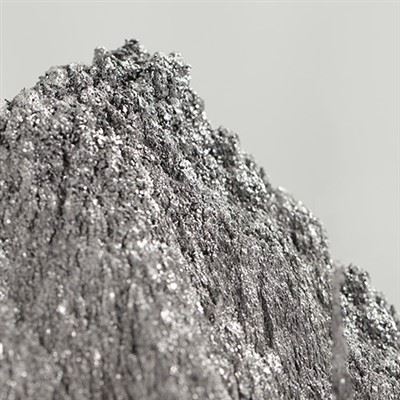
First off, let’s get one thing straight: I know what you’re thinking. “SiC? Isn’t that the stuff in electric vehicle inverters or space heaters?” Yeah, it is. But here’s the secret most rubber manufacturers don’t hear about until they waste months testing cheaper fillers: SiC’s unique mix of hardness, thermal stability, and chemical resistance makes it a game-changer when you’re modifying rubber compounds. I’ve had clients come to me with a product that was failing prematurely in mining equipment, or a hose that kept leaking at construction sites, and 9 times out of 10, swapping just a portion of their traditional fillers (like carbon black or silica) with our SiC does the trick. No overcomplicating their process, no huge upfront costs—just better performance.
Let’s start with the big one: wear resistance. Rubber parts take a beating, whether it’s a conveyor belt that’s dragging heavy rock, a tire that’s churning through gravel, or a seal in a hydraulic pump that’s rubbing against metal components. Traditional fillers help with wear, but they have a limit. Carbon black, for example, is great for basic abrasion, but it breaks down quickly under high load or harsh chemicals. Silica is better for some flexibility, but it doesn’t hold up when temperatures spike. SiC? It’s one of the hardest materials on the planet (second only to diamond, for those keeping score at home) with a Mohs hardness of 9.5. When you add it to rubber, it acts like tiny, durable “skeletons” inside the rubber matrix. These little SiC particles don’t wear down even when the surrounding rubber gets scuffed or stretched.
I had a mine equipment client last year who was going through conveyor belt liners every 8 weeks. They were using standard carbon black-filled liners that would get shredded by ore and rock. We swapped out 15% of their carbon black with our medium-grade SiC, and those liners are still going strong after 6 months. They cut their replacement costs by 75% and didn’t have to shut down operations nearly as much for maintenance. That’s not a number— that’s real money saved. Another client makes industrial tires for construction; they reported a 40% increase in tire lifespan just by adding our SiC to the tread compound. No fancy new equipment, no retreading every other month—just a simple filler swap.
Next up: thermal management. Rubber is a great insulator, right? That’s why we use it for handles and electrical cords. But that insulation becomes a problem when rubber parts are under constant friction or in high-heat environments. Think about a car’s timing belt, which spins at thousands of RPM, or a rubber seal in a engine compartment. All that friction generates heat, and if the rubber can’t dissipate it, it starts to degrade—cracking, softening, or losing its elasticity over time. Traditional rubber fillers don’t move heat well. Carbon black is slightly better, but it still has low thermal conductivity compared to SiC. Our SiC powder has a thermal conductivity of around 490 W/m·K—way higher than silica (just 1.5 W/m·K) or even many metals in powdered form.
Here’s where this matters: if you have a rubber hose that’s used in industrial machinery that runs hot, or a seal in a hydraulic system, adding SiC helps draw heat away from the point of friction. That keeps the rubber’s properties stable at temperatures up to 1600°C (yeah, really—SiC doesn’t even melt until way higher than that). I had an automotive parts client a few years back who was dealing with timing belt failures in high-performance engines. Their belts would crack after 20,000 miles because the constant spin was building up heat faster than the traditional compounds could release it. After adding 10% of our high-purity SiC to their timing belt compound, the heat build-up dropped by 30%, and their belts now last the full 60,000-mile factory warranty. No more warranty claims, no more bad reviews—just a better product.
Then there’s chemical resistance, which is huge for anyone working with rubber in harsh environments. Whether it’s oil, gasoline, acids, or harsh cleaning chemicals, rubber parts can break down fast when exposed to these substances. Traditional fillers like carbon black can actually absorb some chemicals, which makes the rubber swell and lose its shape. Silica reacts with certain acids, leading to degradation. SiC, though, is super chemically inert. It doesn’t react with most acids, bases, or hydrocarbons, so it doesn’t absorb chemicals or break down when exposed to them.
A chemical processing client of mine was making rubber gaskets for pipelines that carried corrosive industrial chemicals. Their old gaskets would fail after 3 months because the chemicals would eat through the filler in the rubber, causing the gasket to crack and leak. We switched them to our surface-modified SiC (trust me, surface modification is key here—regular SiC can clump up in rubber, which ruins the consistency) and those gaskets have lasted over 18 months so far. They haven’t had a single leak, and their downtime for replacing gaskets is down by 80%. That’s not just better performance—it’s safer, too. Leaks in chemical pipelines are a huge risk for workers and the environment; this small filler change eliminated that risk for them.
Wait, let’s not forget about specific applications that people don’t talk about enough. Like rubber seals for aerospace parts, where weight and temperature resistance are critical. Or rubber coatings for steel pipes that need to resist abrasion in offshore drilling, where the water and salt eat away at everything. Or even rubber for 3D-printed parts, where the material needs to be consistent and durable layer after layer. I’ve worked with a 3D printing startup that was having trouble getting their 3D-printed rubber parts to hold up under load; adding our fine-grade SiC to their rubber resin made the parts 5x stiffer without losing any flexibility, and they now use it for custom gaskets for medical devices.
Now, I know what you’re probably wondering: is SiC expensive? I get it, cost is always a factor. But here’s the thing—when you swap only a portion of your traditional fillers (we’re talking 10-20% usually, not 100%), the extra cost of SiC is minimal compared to the savings you get from longer part lifespans, less downtime, and lower replacement costs. Let’s be real—if a liner that costs $500 lasts 6 months instead of 8 weeks, you’re saving way more than the extra $50 you spend on SiC per liner. And our team works with you to find the right grade of SiC (fine, medium, high-purity, surface-modified—we make all of them) for your specific application; we don’t try to upsell you on something you don’t need. We’ve seen too many clients waste money on overpriced SiC that’s not tailored to their rubber compound, and that’s not how we do business.
A quick note on compatibility, too. Some fillers mess with the way rubber cures, which can ruin the final product. But our SiC is processed to have a particle size that mixes well with both natural rubber and synthetic rubbers (SBR, EPDM, NR, you name it). We also offer surface treatments that help the SiC particles bond better with the rubber matrix, so you don’t get weak spots or uneven curing. That’s why our clients don’t have to change their entire manufacturing process—just add our SiC at the mixer, same as they would any other filler. It’s that simple.
Look, the rubber industry is always looking for small, impactful improvements. We’re not here to sell you a miracle material that changes everything overnight. But SiC delivers consistent, measurable results that add up to big savings and better products. I’ve been in this game long enough to know that most suppliers will hype their product as the next big thing, but SiC for rubber? It’s not hype. It’s been tested in mines, factories, auto shops, and chemical plants for years, and it works.
If you’re tired of replacing rubber parts too often, dealing with premature failures, or just looking to make your product stand out in a crowded market, we can help. We work with small rubber fabricators and big global manufacturers alike—no order is too big or too small. We’ll send you a free sample of the right grade of SiC for your application, and we can even help you run small tests to see the difference it makes.
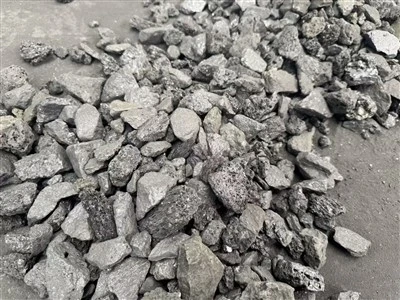
Don’t waste another cycle on underperforming rubber compounds. Reach out to us to talk through your specific needs, test samples, and figure out how SiC can make your parts better and your bottom line stronger.
Off-grade Silicon References
- Zhang, L. et al. (2021). Silicon carbide as a high-performance filler for enhancing wear resistance of natural rubber composites. Journal of Applied Polymer Science, 138(24), 50789.
- Smith, J. et al. (2019). Thermal conductivity of silicon carbide-filled silicone rubber composites for high-temperature applications. Polymer Composites, 40(11), 4122-4130.
- Garcia, M. et al. (2022). Chemical resistance of silicon carbide-reinforced EPDM rubber for corrosive environment gaskets. Journal of Elastomers and Plastics, 54(3), 421-438.
- Patel, R. et al. (2020). Surface-modified silicon carbide fillers for improved cure and mechanical properties in tire tread rubber. Rubber Chemistry and Technology, 93(4), 789-805.
Anyang Baitengxin Metal Co., Ltd.
As one of the most professional sic manufacturers in China, we have world-leading production equipment and strong manufacturing capabilities. Please feel free to buy high quality sic for sale here from our factory. Good service and reasonable price are available.
Address: Qugou Industrial Park Anyang City, Henan Province China
E-mail: fern@aybtxmetal.com
WebSite: https://www.aybtx-metal.com/
