Alright, let’s cut to the chase—if you’re in materials handling, you’ve probably stared at two feeding equipment types in your spec sheet and thought, “wait, which one’s even right for my line?” I get it, I’m on the front lines of feeding systems every day as a belt feeding conveyor supplier, and I’ve lost count of how many times folks mix up belt feeders and screw feeders like they’re interchangeable. Spoiler: they’re not. I’m gonna break this down like we’re chatting over coffee (no stuffy jargon, promise) and explain exactly where each shines, where they flop, and why picking the wrong one’ll cost you way more than you think. Belt Feeding Conveyor
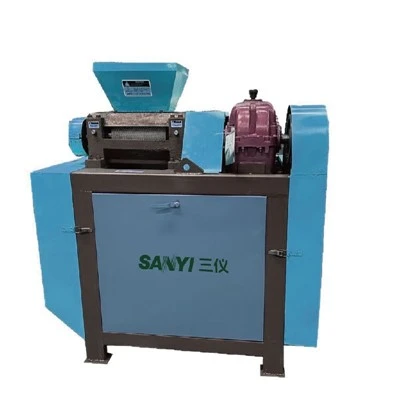
First, let’s ground this in what each actually does. A belt feeder, like the ones my team builds, uses a continuous rubber (or sometimes vinyl, depending on the material) loop to carry bulk stuff from a hopper to your next process—say, a crusher, mixer, or packaging machine. It’s just a straight, moving belt with side guards to keep material from spilling out. A screw feeder? That’s the one with a helical blade (the “screw”) spinning inside a trough or tube that pushes material along like a giant kitchen garlic press, basically. Simple enough, right? But let’s dive into the real differences that matter for your operation, not just the textbook stuff.
First up: material compatibility. This is the big one that’ll eliminate half your choices before you even call a supplier. If you’re moving chunky stuff—think gravel, wood chips, construction debris, even large pellets that don’t flow well—screw feeders are gonna get stuck or jammed. Wait, let’s be real: if your material’s bigger than like 2 inches across, a screw feeder’s helical blade can’t wrap around it without locking up. I’ve seen it happen to a construction client last year—they tried feeding 3-inch crushed concrete with a tiny screw feeder and ended up with 4 hours of downtime unclogging it, not to mention bending a $1,200 blade. Belt feeders? They handle chunky, abrasive, even sharp stuff like a champ. The belt might wear a little, but it’s way easier to replace a belt than a bent screw, and we build our belt feeders with thick, abrasion-resistant rubber for exactly this. Now, for fine, powdery stuff—flour, cement powder, plastic resin pellets? Wait, don’t write off either yet, but screw feeders here have a small advantage. Because they’re sealed inside a tube, they don’t let fine dust blow around as much. Though, full transparency, we’ve customized belt feeders with dust hoods and enclosed side guards that keep 99% of that dust contained too—enough to work in a food processing plant, actually. But super fine, explosive powders (like some chemical additives)? Screw feeders can be fully pressure-sealed to prevent dust ignition, while belt feeders need extra explosion-proof components that add cost. That’s a key tradeoff.
Next, feed rate accuracy and control. This is where people make the mistake of thinking both are precise, and that’s just not true. If you need a consistent, exact flow rate—say, a pharmaceutical lab that needs 0.5 grams of active ingredient per minute, or a food mixer that can’t have 100 lbs one hour and 150 lbs the next—screw feeders nail this. Because the screw’s rotation speed directly translates to a fixed volume of material, you can dial in the RPM super precisely with a digital controller. But wait, that accuracy only works for free-flowing, uniform materials. If your powder’s sticky, or your chunks vary in size, the screw will push some areas faster and leave gaps—so your feed rate jumps all over the place. Belt feeders? They’re great for high-volume, consistent flow, but not for ultra-precise micro-feeding. Like, if you’re moving 10 tons of recycled plastic per hour, a belt feeder’ll deliver that way more evenly than a screw, no matter if the pellets are slightly different sizes. But if you’re trying to feed 5 lbs of a specialty resin per hour for a custom product? A screw feeder’s your call here. Also, quick note: belt feeders have what’s called a “drag effect” if the material’s really wet or sticky—like wet sawdust can cling to the belt instead of sliding, so your rate drops unexpectedly. Screw feeders push that material, so they don’t have that issue, but again, chunks jam them.
Then there’s maintenance and downtime, which is the bane of every production manager’s existence. Let’s be real: no one wants a 2-hour repair in the middle of a shift. Screw feeders: moving parts are the spinning blade and the bearings. If you’re feeding abrasive material, the blade wears down over time, and you have to replace it. Also, if you get a chunk stuck, you have to shut the whole system down, disassemble the trough, and yank it out— that’s not quick. Belt feeders: the main wear part is the belt, which we design to last 2–5 years depending on material, and replacing it takes like 30 minutes with basic tools (we even supply a quick-change belt kit for our clients). The other parts are pulleys, and those only need lubrication every few months. I had a food processing client switch from a screw feeder to our belt feeder last year—their downtime for feeding maintenance dropped by 75%, and they saved $18k a year on repair parts. But belt feeders have one flaw: if the belt slips on the pulleys, you get inconsistent flow. But we fix that with automatic belt tensioners on all our belt feeders, so that problem’s basically nonexistent for our clients.
Cost, let’s get to the numbers because everyone cares about that upfront. Screw feeders are cheaper to buy, typically—like, a 10-foot screw feeder for moderate capacity runs $1,500–$3,000, while a comparable belt feeder runs $3,000–$5,000. But that’s upfront. The hidden costs: if your material’s abrasive, that screw blade’s gonna need replacing every 6–12 months, which is $500–$1,000 a pop. Plus, if you jam it, that’s downtime costing you $$$. Belt feeders: higher upfront cost, but lower maintenance, longer part life, and way less downtime. For a client doing 24/7 construction material processing, they made back the extra cost of our belt feeder in 8 months from just saved repair time and parts. Also, capacity: if you need high volume—like 50+ tons per hour—screw feeders get really big and expensive, because the screw diameter has to be massive. Belt feeders scale way easier—we have clients running 200 tons per hour on standard belt feeders, no custom sizing needed beyond adjusting belt width.
Wait, let’s also talk about space. Screw feeders are long and narrow, so they fit into tight vertical or horizontal spaces, like under a hopper in a cramped factory. Belt feeders are a little longer because the belt has to have room to loop, but they’re way flatter, so if you have space above the line instead of below, a belt feeder works better. I had a small grain farm client last year who had a tiny storage area under their hopper—they thought a screw feeder was the only option, but we customized a low-profile belt feeder that fit exactly, no wasted space.
Now, let’s clear up some common myths because I hear these all the time. Myth #1: Belt feeders only handle light materials. No, we build belt feeders with steel-reinforced belts that handle 10,000 lbs per hour of heavy gravel, no problem. Myth #2: Screw feeders are always more accurate. Only if you’re dealing with uniform, free-flowing powders. If your material has any variation in size or consistency, belt feeders can be calibrated to be just as consistent for high-volume use. Myth #3: Belt feeders cause more dust. No, modern belt feeders with enclosed side guards and dust collection hoods are actually cleaner than open screw feeders, which often blow dust out around the hopper.
So, when do you pick which? Let’s do a quick cheat sheet for you:
Pick a belt feeder if:
- Your material is chunky, abrasive, or has varying particle sizes (gravel, wood chips, construction debris, plastic lumber)
- You need high volume throughput (10+ tons per hour)
- You want low maintenance and minimal downtime
- You’re working with sticky materials that don’t jam moving blades
Pick a screw feeder if:
- Your material is fine, free-flowing powder (flour, cement, resin pellets)
- You need ultra-precise micro-feeding (less than 5 lbs per hour)
- You’re working with explosive, dust-sensitive materials that need a fully sealed system
- You have limited vertical space for the equipment
At the end of the day, the biggest mistake I see clients make is picking a feeder based on upfront cost instead of their actual material and process needs. I’ve had so many people come to us after buying a cheap screw feeder that jammed every week, and they ended up paying more for repairs than they would have for a good belt feeder in the first place.
If you’re stuck trying to figure out which one’s right for your operation, I’m here to help. We build custom belt feeding conveyors tailored to your exact material, capacity, and space—no one-size-fits-all garbage, I promise. Just reach out, tell me what you’re feeding, how much per hour, and your space constraints, and we can walk through it over a call (no sales pitchy stuff, just real advice). Let’s make sure you don’t waste money on equipment that doesn’t work for you.
Vertical Fermenter References:
- Bulk Solids Handling: Selection of Feeding Equipment for Industrial Processes, 2022
- Material Handling Equipment Association (MHEA) Feeder Performance Standards, 2021
- Industrial Belt Conveyor & Feeder Maintenance Best Practices, National Association of Manufacturers, 2023
- Screw Feeder Design for Fine Powder Applications, Powder Technology International, 2020
Shandong Heze Sanyi Biological Engineering Co., Ltd.
Shandong Heze Sanyi Biological Engineering Co., Ltd. is one of the most reliable belt feeding conveyor manufacturers and suppliers in China, also supports customized service. We warmly welcome you to buy CE approved belt feeding conveyor made in China here from our factory.
Address: No.1118 Lanzhou Road, High-tech Zone, Heze City.
E-mail: business@hzsysam.com
WebSite: https://www.hzsysam.com/
