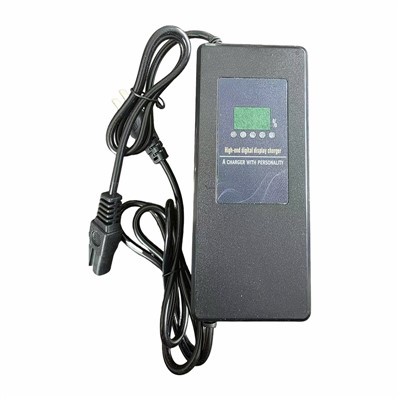
Determining the right charger for a lead acid battery based on its capacity is a crucial step in ensuring the longevity, performance, and safety of your battery. As a lead acid battery charger supplier, I’ve encountered numerous customers grappling with this very question. In this blog, I’ll share insights into the key factors to consider when choosing the appropriate charger for your lead acid battery, drawing on my experience in the industry. Lead Acid Battery Charger
Understanding Lead Acid Battery Capacities
Before delving into charger selection, it’s essential to understand what battery capacity means. The capacity of a lead acid battery is typically measured in ampere – hours (Ah). It represents the amount of charge the battery can deliver over a specified period. For example, a 100Ah battery can theoretically supply a current of 1 ampere for 100 hours, 2 amperes for 50 hours, and so on.
The capacity of a lead acid battery can vary widely depending on its intended use. Smaller lead acid batteries, such as those used in uninterruptible power supplies (UPS) or small vehicles like golf carts, may have capacities ranging from 10Ah to 50Ah. Larger batteries, used in industrial applications or electric vehicles, can have capacities well over 100Ah, sometimes reaching several hundred ampere – hours.
Charging Rate Basics
The charging rate is a critical aspect when selecting a charger for a lead acid battery. It is usually expressed as a ratio of the charging current to the battery’s capacity. This ratio is denoted as C. For instance, a C/10 charging rate means that the charging current is one – tenth of the battery’s capacity. If you have a 100Ah battery, a C/10 charging rate would correspond to a charging current of 10 amperes (100Ah / 10).
A slow charging rate, like C/20 or C/10, is generally considered gentle on the battery. It allows for a more even distribution of charge within the battery cells and reduces the risk of overheating and gassing. This type of charging is ideal for maintaining the battery’s health and is often used for maintenance charging or for batteries that are not under heavy use.
On the other hand, a fast – charging rate, such as 1C or higher, can charge the battery much more quickly. However, it also generates more heat and can cause excessive gassing, which might lead to a loss of electrolyte and a reduction in battery life. Fast charging is typically used in applications where the battery needs to be quickly replenished, like in some electric vehicle charging scenarios, but it should be used with caution.
Voltage Considerations
The voltage of the charger must be compatible with the voltage of the lead acid battery. Lead acid batteries come in different voltage ratings, such as 6V, 12V, 24V, etc. The charger should have an output voltage that matches the battery’s voltage.
Most lead acid battery chargers are designed to provide a slightly higher voltage than the battery’s nominal voltage during the charging process. This is because the battery’s internal resistance causes a voltage drop when current flows through it. For example, a 12V lead acid battery may have a nominal voltage of 12V, but the charger may need to provide around 13.8 – 14.4V to fully charge the battery.
It’s important to note that over – voltage charging can cause damage to the battery, leading to accelerated corrosion of the plates and loss of electrolyte. Under – voltage charging, on the other hand, may result in incomplete charging, which can lead to sulfation of the battery plates over time.
Charging Stages and Battery Types
Lead acid batteries can be broadly classified into two main types: flooded lead acid (FLA) batteries and valve – regulated lead acid (VRLA) batteries, which include absorbed glass mat (AGM) and gel batteries. Each type requires a different charging profile.
Flooded Lead Acid (FLA) Batteries
FLA batteries are the traditional type of lead acid batteries. They have removable caps that allow for the addition of water to replace the electrolyte lost during charging. FLA batteries typically require a three – stage charging process: bulk charging, absorption charging, and float charging.
- Bulk charging: In this stage, the charger supplies a constant current to the battery at a relatively high rate. The battery voltage gradually rises as it charges. This stage can charge the battery up to about 80% of its capacity.
- Absorption charging: Once the battery voltage reaches a certain set point, the charger switches to the absorption stage. Here, the charger maintains a constant voltage while the charging current gradually decreases. This stage is used to fully charge the battery.
- Float charging: After the battery is fully charged, the charger switches to the float stage. In this stage, the charger provides a lower voltage to maintain the battery’s charge without overcharging it.
Valve – Regulated Lead Acid (VRLA) Batteries
VRLA batteries are sealed and do not require the addition of water. AGM and gel batteries are two common types of VRLA batteries. While the basic charging stages are similar to FLA batteries, the charging parameters, such as voltage and current limits, are different.
AGM batteries can generally tolerate a slightly higher charging current compared to gel batteries. Gel batteries are more sensitive to over – charging and require a lower charging voltage during the absorption and float stages. Chargers designed for VRLA batteries need to be able to adjust the charging parameters according to the specific type of VRLA battery.
Calculating the Right Charger for Your Battery
To determine the right charger for your lead acid battery, you need to consider both the battery’s capacity and its type. Here’s a step – by – step guide:
- Identify the battery’s capacity: Check the battery label for its ampere – hour (Ah) rating.
- Determine the appropriate charging rate: Based on the battery’s application and your requirements, choose a suitable charging rate. For most regular applications, a C/10 to C/5 charging rate is a good choice.
- Calculate the charging current: Multiply the battery’s capacity by the chosen charging rate. For example, if you have a 50Ah battery and you choose a C/10 charging rate, the charging current would be 50Ah × (1/10)= 5 amperes.
- Select a charger with the correct voltage and current output: Make sure the charger’s output voltage matches the battery’s voltage and that its maximum charging current is equal to or greater than the calculated charging current.
- Consider the battery type: Ensure that the charger is designed for the specific type of lead acid battery you have (FLA, AGM, or gel).
Additional Features to Look for in a Charger
In addition to the basic voltage, current, and charging profile requirements, there are some other features that can enhance the performance and safety of your charger.
- Over – charge and over – current protection: These features prevent the battery from being damaged by excessive voltage or current during charging.
- Temperature compensation: This feature adjusts the charging voltage based on the battery’s temperature. As the temperature of the battery changes, its charging requirements also change. Temperature compensation helps to ensure that the battery is charged correctly in different environmental conditions.
- Automatic charging: An automatic charger can switch between the different charging stages automatically, making the charging process more convenient and reducing the risk of human error.
Conclusion
Selecting the right charger for your lead acid battery based on its capacity is a complex but essential task. By understanding the battery’s capacity, charging rate, voltage requirements, and type, you can make an informed decision when choosing a charger. As a lead acid battery charger supplier, I’m always here to help you find the best charger for your specific needs.
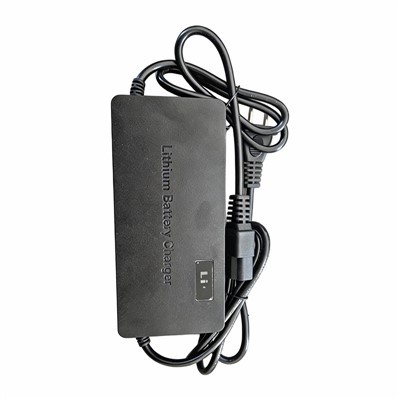
Lithium Battery Charger If you’re in the market for a high – quality lead acid battery charger and need assistance in determining the right one for your battery, don’t hesitate to reach out. We have a wide range of chargers suitable for different types and capacities of lead acid batteries. Contact us to start a discussion about your requirements and explore how we can provide the perfect charging solution for you.
References
- Linden, D., & Reddy, T. B. (2001). Handbook of Batteries (3rd ed.). McGraw – Hill.
- GiIlman, D. W. (2002). Battery Charger Handbook. Tab Electronics.
Tianchang Hengze Technology Co., Ltd.
With abundant experience, we are one of the most professional lead acid battery charger manufacturers and suppliers in China. Please rest assured to buy bulk lead acid battery charger made in China here from our factory. If you have any enquiry about quotation, please feel free to email us.
Address: No. 8 Sanxing Road, Qinlan Town Industrial Park, Tianchang City, Chuzhou City, Anhui Province, P.R. China
E-mail: 604894957@qq.com
WebSite: https://www.hengzebc.com/
