What’s a Wedge Wire Sieve Bend? Let’s Break This Down Like We’re Chatting Shop Wedge Wire Screen
If you’re in industrial processing, mining, water treatment, or even food and beverage manufacturing, you’ve probably stumbled on “wedge wire sieve bend” in a spec sheet or a supplier’s list of equipment—but let’s be real, that term sounds way more technical than it actually is. As someone who’s been selling wedge wire screens for over 8 years, I get it; no one has time to parse jargon when you’re troubleshooting a bottleneck or ordering replacement parts. Today, I’m walking through what this thing actually is, how it works, and why it’s probably the unsung hero of your separation process (no, really).
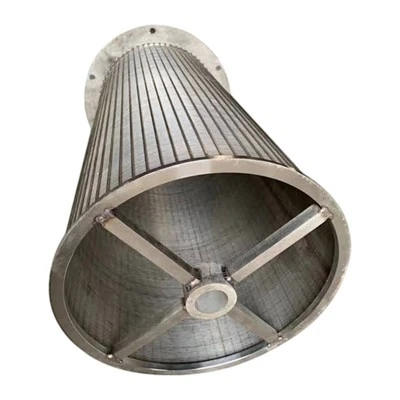
First, let’s skip the textbook definition. A wedge wire sieve bend is a curved, stationary screen made entirely from wedge wire—those V-shaped metal profiles that are welded together edge-to-edge to form a continuous, slot-shaped surface. Think of it like a metal ladder, but instead of rungs, it’s a thin, pointed metal wire (the “wedge”) sitting upright, with the gaps between them exactly sized for what you need to filter out. The bend part is non-negotiable: it’s shaped into a gentle curve, usually between 15 and 45 degrees, so slurry or liquid can flow over it under gravity. No pumps, no extra power—just gravity doing the heavy lifting. That’s the big win right there; a lot of separation equipment relies on motors or pressurized systems, but this one’s low-key energy-efficient.
Wait, let’s get specific about the wire because that’s where the magic happens. Wedge wire isn’t your standard round wire. The face of the wire that touches the slurry is a sharp point, and the backside (the one that’s welded to the support bars) is a wider base. That design does two super important things: first, it creates slots that never clog easily. Unlike perforated screens or woven wire mesh, where particles can get stuck in round holes, the wedge shape lets solids slide right off the narrow face, and the slot size is consistent across the entire screen—no warping or stretching over time. Second, the gap between wires is open all the way through, so there’s no buildup of material in the screen structure. If you’ve ever dealt with a clogged screen that cuts your production in half, you’ll appreciate that detail.
Now, how does it work in a real process? Let’s use a common example: a mineral processing plant washing coal. You’ve got a mix of coal particles (say, 2 mm and bigger) and fine silt and water (slurry). The slurry gets fed onto the top of the curved sieve bend. Gravity pulls it down, and as the liquid and fine silt pass through the slots, the larger coal particles can’t fit, so they slide off the end of the screen into a separate collection bin. No extra filtration, no drying before you separate—just a quick, cheap step to dewater and size your material. Another example: wastewater treatment. Sieve bends are used to filter out plastic bits, food waste, or other large contaminants before the water goes to the next treatment step. Even in craft breweries, some use small sieve bends to separate spent grain from mash, which is way gentler on the grain than a press.
Here’s the part that usually confuses people: how is it different from a regular straight wedge wire screen? Straight screens are for stationary filtration, like static dewatering bins or liquid filters, but sieve bends are curved for dynamic, gravity-driven flow. If you tried to make a straight wedge wire screen do the same job, slurry would just pool on it instead of flowing through. The curve creates that angled surface that lets solids move downstream on their own. Also, sieve bends are almost always made to order for your specific slot size and bend angle—we’ve made ones for 0.1 mm slots (for fine particle separation) and others for 10 mm slots (for dewatering bulk minerals). That customization is huge; you don’t have to settle for a one-size-fits-all screen that doesn’t work for your material.
Let’s talk about what makes wedge wire sieve bends better than other separation tools, because that’s what most customers ask me. First, durability. Wedge wire is usually made from stainless steel (304 or 316, depending on if you’re dealing with corrosive chemicals or saltwater) or even galvanized steel for less harsh environments. It can handle heavy abrasion from mining rocks, repeated backwashing, and high flow rates without bending or breaking. I’ve had customers use the same sieve bend for 10 years with just a quick pressure wash every few months—way longer than a woven mesh screen, which might last a year or less. Second, low maintenance. No moving parts, no motors to fix, no screens to replace every couple of months. You can even run them 24/7 if needed, as long as you do the occasional backwash to dislodge any rare fine particles that might get stuck. Third, consistent separation. Since the slots are precision-cut (not drilled or punched), the gap size never varies—so you get uniform sizing every time, which is critical for industries like food and pharma where consistency is non-negotiable.
Wait, are there any downsides? Let’s be honest, no product is perfect. Sieve bends aren’t great for very fine filtration (we’re talking below 0.05 mm)—for that, you’d need something like a vacuum filter or centrifuge. They also rely on gravity, so if your process doesn’t have a way to feed slurry from a height, you might need a small pump to get it onto the screen. But for the vast majority of separation jobs, those are minor trade-offs for what you get.
Now, for anyone looking to actually use one: how do you pick the right one? First, figure out your slot size. That’s the gap between the wedge wires—if you’re dewatering 5 mm coal, you want a slot size a bit smaller than 5 mm, so the coal can’t fall through. Second, choose the right bend angle. Most common is 20 or 30 degrees, but some processes use 45 degrees for faster flow. Third, material: if you’re dealing with acidic chemicals, go with 316 stainless steel; for mining gravel, 304 works just fine. And fourth, make sure it’s sized correctly for your flow rate—too small, and it’ll clog; too big, and you’re wasting money on extra screen area.
As a wedge wire screen supplier, I see a lot of customers buy the wrong sieve bend at first because they don’t pay attention to those details. A guy last year was using a 10-degree bend for his grain separation and couldn’t figure out why it was pooling—switched to a 25-degree, and his throughput went up 30% overnight. That’s the kind of win we live for.
So, to wrap this up: a wedge wire sieve bend is a curved, gravity-driven separation screen made from V-shaped wedge wires welded into precise slots. It’s durable, low-maintenance, and perfect for dewatering, sizing, or removing large contaminants from liquids and slurries. It’s not a fancy high-tech machine, but it’s one of the most reliable tools in industrial separation.
If you’re dealing with a separation bottleneck, your current screen keeps clogging, or you just want to upgrade to something that lasts longer, don’t hesitate to reach out to discuss your needs. We can help you pick the right slot size, material, and bend angle for your exact process, no pressure, no confusing sales talk.
Screen Drum References:
- Industrial Screen Media Association. (2022). Wedge Wire Screen Technology: Applications and Performance Standards.
- Mining and Construction Machinery Manufacturers Association. (2021). Sieve Bend Screen Selection Guide for Mineral Processing.
- Water Research Foundation. (2020). Fine Screening Technologies for Municipal and Industrial Wastewater Treatment.
- Food and Drug Administration. (2019). Equipment Design Standards for Food and Beverage Processing Screens.
- Wedge Wire Manufacturers Association. (2023). Durability Testing Protocols for Wedge Wire Sieve Bends in Abrasive Environments.
Anping County Yan Zhao Mining Sieve Mesh Co., Ltd.
As one of the most professional wedge wire screen manufacturers and suppliers in China, we have world-leading production equipment and strong manufacturing capabilities. Please feel free to buy advanced wedge wire screen made in China here from our factory.
Address: South of Datong New Village, Southern-Suburb Anping Industrial Park, Anping County, Hebei, P.R.China
E-mail: 17303289182@163.com
WebSite: https://www.yanzhaowedgewire.com/
