If you’ve ever driven down a fresh highway and thought, “Wow, those lines are so straight they look like they were drawn with a laser,” you’re not alone. For years, I’ve supplied road machinery (you might’ve seen our rigs at highway jobs across the country) and get asked this exact question all the time: How the hell do those road striping machines get lines that accurate? No wobbly curves, no faded spots, no lines that veer off into the shoulder like they’re lost. It’s not magic—just a lot of good old engineering, paired with little tricks we’ve picked up working on hundreds of projects. Let’s break it down, real talk. Road Machinery

First off, let’s get one thing straight: striping accuracy starts before the machine ever touches the road. I’ve seen guys skip this step because they’re crunched for time, and that’s where most of the trouble comes from. Before we even pull out the striping rig, we send a crew out with a transit or a GPS rover to map the exact lane edges, center lines, and crosswalks. Wait, GPS? Yeah, not the old clunky stuff that would drift if a tree got in the way. Our machines (and the ones we supply) use RTK GPS—real-time kinematic, for the uninitiated. That’s the same tech that lets self-driving cars stay in their lane, only on a much sturdier setup. It listens to a base station that’s usually set up within 10 miles of the job site, and it corrects the GPS signal every second, to within a centimeter. No more guessing where the center line should be. Back in the day, we’d use chalk lines stretched between stakes, and if a stake got moved by a lawnmower or a breeze, the whole line was off. Now, we punch the coordinates into the machine’s computer, and that’s our baseline. Easy, but it works.
Next, the machine itself can’t just follow a line—wait, no, actually it does, but not the way you think. The striping head (that’s the part that actually lays down paint or thermoplastic, depending on the job) has what’s called a steering actuator, linked right to that RTK GPS. So if the machine drifts even an inch to the left or right, the actuator corrects it instantly. But here’s the catch: that actuator can’t be too jerky, or you get a line that looks like a series of tiny zigzags. We set the correction threshold to about half an inch—so if the machine is off by less than that, it doesn’t do anything. It’s like steering a bike: you don’t jerk the handlebars every time you wobble, you make small, smooth adjustments. That’s a trick we tested last year on a highway repave in Ohio—we tried a tighter threshold, got line that was technically more accurate but looked weird. The DOT ended up switching back, because driver perception matters too. If a line is so straight it makes drivers carsick, that’s not a win.
Then there’s the part that most people don’t see: the road prep. If the road surface is dirty, oily, or has loose gravel, the paint or thermoplastic won’t stick evenly, but worse, the machine can bounce. Bounce is the enemy of accuracy. I’ve seen a striping machine hit a small pothole and get a half-inch bump in the line mid-block. So before we stripe, we blast the road with a high-pressure air sweeper, sometimes a chemical degreaser for areas where trucks leak oil. For thermoplastic (that’s the hot, plastic-based stuff that’s used on high-traffic highways, lasts 5-7 years), we also heat the surface a little—100 degrees Fahrenheit, give or take—so the thermoplastic melts into the road instead of just sitting on top. That not only makes the line last longer, it prevents it from peeling up, which keeps the markings consistent.
The striping head itself is another big piece. Old striping machines had a single nozzle or spray bar that would lay paint in a line, but those would clog or drip. The machines we supply have a modular spray system, with tiny, individual nozzles spaced exactly a quarter-inch apart. Why? Because if one nozzle clogs, the rest keep working, and the computer can tell which nozzle is blocked (it monitors flow rate) and alert the operator. No gaps in the line, no uneven thickness. We also use positive-pressure paint systems, so the paint or thermoplastic is delivered to the nozzles at a consistent 30 psi. If pressure drops, the line gets thinner; if it’s too high, it gets thicker. That consistency keeps the line width within an eighth of an inch, which is required for most state DOT standards. Speaking of which, most DOTs have super specific specs for line width—12 inches for a center line, 24 inches for a shoulder line, right down to the millimeters. Our machines let you set that width on the touchscreen, and the spray bar adjusts automatically. No more hand-measuring with a tape while the sun is beating down.
Operator skill still matters, don’t get me wrong. You could have a $100,000 machine, but if the guy driving it is distracted, or doesn’t know how to calibrate the RTK GPS, you’ll get bad lines. That’s why we offer training with every machine we sell or rent— not just a 30-minute video, but hands-on training at our shop, and a day on a real job site. We teach them how to check the base station signal, how to calibrate the spray system, how to adjust the steering threshold for different road surfaces. Last year, a guy from a small construction company bought one of our used machines, skipped the training, and ended up with lines that were an inch off in some spots. We sent a trainer out for free, got him sorted, and he’s been a repeat customer ever since. The machine does most of the work, but the operator is the one who makes sure all the settings are right.
Wait, also, what about when the road curves? Like, a ramp that has a gentle arc, not a straight line. The RTK GPS is programmed with a pre-made design file (most DOTs provide these as shapefiles) that has all the curves, angles, and turnouts. The steering actuator follows that curve smoothly, but we also add a gyroscope to the machine, just in case the GPS signal drops. If a tunnel or a tall building blocks the base station signal for even a few seconds, the gyroscope keeps track of the machine’s movement, so it doesn’t veer off. It’s like a backup battery for accuracy. We tested that once on a job near Pittsburgh, where we drove under a bridge that blocked the GPS for 12 seconds. The machine stayed on line, no problem. Without the gyro, we would’ve had a weird line across the bridge.
Another thing most people don’t talk about: environmental conditions. Paint doesn’t set right if it’s too cold, too hot, or too windy. If the wind is blowing 20 mph, it can blow the paint to one side, making the line uneven. Or if it’s below 50 degrees, acrylic paint takes too long to dry, and cars driving over it smudge it. Our machines have temperature sensors that alert the operator when conditions are bad, and some models even have wind sensors that shut off the spray if the wind is too high. That’s a big one—we once had a job in Texas where the wind picked up to 25 mph mid-morning, and the machine’s wind sensor cut the spray, so we didn’t waste paint and got a perfect line when conditions calmed down.
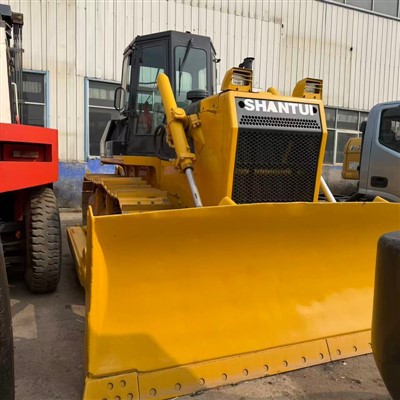
Let’s be real, no line is ever perfect, but these machines get within the DOT’s tolerance every single time. I’ve been in this business for 15 years, and I still get impressed when I see a fresh line that doesn’t have a single wobbly spot. It’s not just fancy tech, though— it’s the combination of good prep, solid engineering, and operators who know how to use the equipment. If you’re in the market for road machinery, whether it’s striping machines, sweepers, or anything else for road work, hit us up to talk through what you need. We don’t do one-size-fits-all, and we’ll work with you to make sure you get equipment that’s accurate, reliable, and fits your budget. No pressure, just honest advice from a guy who’s been in the trenches.
Railing Semi-trailer References
- Federal Highway Administration. (2021). Road Marking Materials and Practices Manual. U.S. Department of Transportation.
- National Asphalt Pavement Association. (2020). Precision Stripe Technology for Modern Road Construction. NAPA Publications.
- Roberts, T. (2019). “RTK GPS Applications in Road Striping Operations.” Journal of Construction Engineering and Management, Vol. 145, No. 8.
Liangshan Guanyue Auto Trading Co., Ltd.
As one of the leading road machinery manufacturers and suppliers in China, we warmly welcome you to buy bulk high quality road machinery at low price from our factory. If you have any enquiry about pricelist and quotation, please feel free to email us.
Address: Liangshan County, Jining City, Shandong Province
E-mail: guanyuetruck@gmail.com
WebSite: https://www.gytruck.com/
