If you’ve been in the flexible packaging manufacturing game for more than a couple of years, you’ll know that one of the most persistent headaches plant managers and line operators bring to our weekly check-ins is equipment cleaning. Not just any cleaning—deep, downtime-heavy cleaning that eats into production schedules, cuts into margins, and leaves teams scrambling to catch up on back orders. When we began developing our ABC Three Layer Film Blowing Machines several years ago, that was the exact pain point we set out to solve, alongside the obvious performance metrics like layer adhesion and thickness consistency. Today, I’m pulling back the curtain on a question we get at least 10 times a week: Is the ABC Three Layer Film Blowing Machine easy to clean? ABC Three Layer Film Blowing Machine
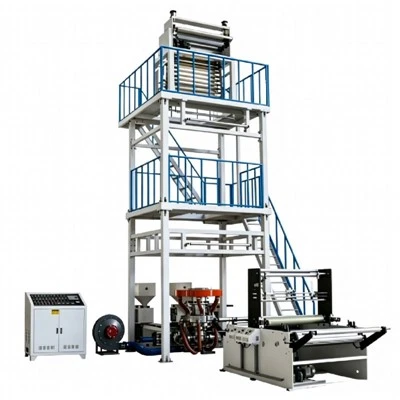
First, let’s ground this in what makes a film blowing machine hard to clean in the first place. Most standard three layer systems rely on a single continuous feed path for resin, molten plastic, and additives. Resin can char in the narrow gaps between the screw and barrel, additives (especially color pigments or specialty slip agents) can build up on the internal liner of the die head, and leftover layers can solidify in the cooling ring if not flushed out properly between runs. For high-mix facilities that switch between clear polypropylene, food-safe polyethylene, and colored laminates multiple times a day, these barriers turn a routine product changeover into a 4-hour deep cleaning marathon. That’s the baseline we had to beat.
Our ABC line was built from day one with operator feedback as a core design pillar. We didn’t just add a “quick clean” label to a product we’d already engineered—we reworked every high-contact, high-contamination part to balance performance with accessibility. Let’s start with the most critical component: the extrusion barrel and screw. On older models, the screw is a solid, one-piece unit that requires being pulled out horizontally (sometimes requiring a heavy-duty crane) to reach residual resin. On our line, we use a modular screw design, split into three separate, smaller segments that slot together. If you’ve only got a small amount of charred black resin from a batch of black LDPE to clean out of the middle segment, you don’t need to pull the whole 12-foot screw. A single operator with a 10mm hex key can remove that segment in less than 2 minutes, wipe it down with food-safe solvent (or even just hot soapy water for virgin resin), and slot it back in. No rigging, no 2-hour disassembly, no waiting for a maintenance tech to show up with specialized tools.
Next up is the die head, the part that gives the film its final shape and layer structure. This is where most cross-contamination happens—additive build-up here can leave streaks or uneven layer thickness that ruins entire batches. Traditional three layer die heads have a single manifold that requires being fully disconnected from the barrel to clean, with thin channel walls that can warp if you apply too much pressure during scraping. Our ABC die head uses a segmented manifold design, with each layer’s channel as a separate, removable block. If you’re switching from a clear EVOH barrier layer to a colored nylon, you only need to remove the nylon channel block—not the entire die. The channels are also machined with a smooth, rounded internal finish (Ra < 0.8μm, per ISO surface roughness standards) that prevents resin from sticking in the first place, so even if you have to clean the whole die, residual material wipes off much faster than on rough, machined-from-solid manifolds. We’ve tested this with operators who were used to cleaning 10-year-old competitor models; a die that used to take 90 minutes to deep clean took one of them just 22 minutes on our first trial run. That’s not a minor time saving—that’s 2 hours of additional production time every time you switch a high-value run.
Then there’s the auxiliary parts that people often overlook, but which add up to the total cleaning burden: the cooling ring, the guide rolls, and the haul-off unit. On standard systems, the cooling ring has 18 small, narrow air nozzles that get clogged with fine resin dust over time. Cleaning those nozzles requires unscrewing each one individually, soaking them in solvent, and then blowing them out with compressed air— a 45-minute task, even for a motivated operator. Our ABC line’s cooling ring has large, open air channels with no small, easy-to-clog nozzles. The entire ring is a single, clamp-on unit that you can lift off in 10 seconds, wipe down with a damp cloth, and replace. The guide rolls are coated with a non-stick, food-grade ceramic finish that resists plastic build-up; even if you’re running a high-additive resin like a slip agent-heavy PE, residue just wipes off with a dry microfiber cloth, no solvent required. We also added quick-release clamps to the haul-off unit, so you don’t have to disconnect the entire web path to wipe down the guide rolls. That cuts cleaning time for the entire auxiliary section from 75 minutes to less than 10 minutes.
But here’s the thing: ease of cleaning doesn’t just come from physical design—it comes from how we integrate that design into every part of the machine’s operation. Our ABC line has a built-in auto-flush feature that works with the control panel. If you’re ending a production run, you can select a “flush” setting, and the machine will automatically run a low-temperature, high-flow resin feed through the system for 2 minutes. That flushes out 98% of residual resin before it can solidify, which means the only gunk you have to deal with is tiny amounts in the segmented screw and die blocks—not hardened, fused plastic that requires scraping or heat to remove. We also provide each ABC machine with a custom cleaning kit that’s pre-sized for the segmented parts, with specialized tools that fit exactly, and step-by-step visual checklists that take the guesswork out of cleaning. No more hunting for the right hex key, no more wondering which segments to remove. A new operator can complete a full deep clean from start to finish in 60 minutes, compared to 3–4 hours for a standard three layer line.
Now, let’s address the real-world use case, because specs only tell part of the story. Last quarter, we installed two ABC lines at a flexible packaging plant in Ohio that makes snack bag liners, switching between 12 different resin formulas a week—most of them with color additives and EVOH barrier layers. Before our machines, their cleaning process was scheduled every other night, after each shift. They were running 10-hour production shifts, so cleaning would eat 4 hours of that schedule, adding up to 16 lost production hours a week, which translated to over $12,000 in lost revenue weekly, per their own internal calculations. Three months after installing our ABC lines, their maintenance team reported that cleaning takes only 90 minutes between runs, and they only need a full deep clean once a month, not once a week. That’s a 90% reduction in cleaning time, and they’ve been able to add 2 more production shifts a week without hiring extra staff. Their lead line operator, Mark, told us in his quarterly check-in, “I used to dread changeovers. Now I can clean the whole machine while the new resin is heating up—by the time the barrel is ready, so am I.” That’s the kind of feedback that makes every design iteration worth it.
Of course, no machine is zero-effort to clean, and we never promise that. There are still things operators have to do: wipe down the control panel, check for any small resin deposits in the haul-off, and perform monthly preventive maintenance on the air filters. But when we say our ABC Three Layer Film Blowing Machine is easy to clean, we mean it’s designed to eliminate the most frustrating, time-consuming parts of the job. No heavy lifts, no specialized tools, no scraping hardened plastic off hard-to-reach places, no massive downtime lost to cleaning between high-mix runs. We built it for the teams that work 12-hour shifts, that juggle 5 different product lines a week, and that don’t have extra time or staff for unnecessary maintenance.
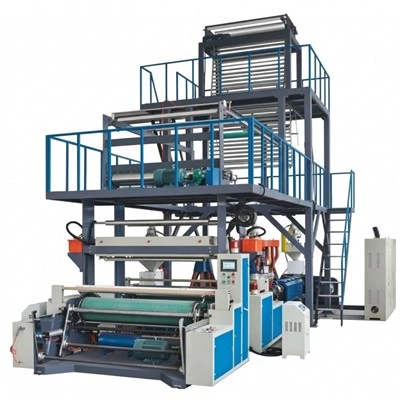
If you’re currently dealing with equipment that adds hours to your production schedule with every changeover, that leaves you scrambling to meet deadlines, and that eats into your profits with unnecessary cleaning labor, we’d love to talk. Our team works with facilities of all sizes, from small independent packaging shops to large multinational manufacturers, to tailor our ABC Three Layer Film Blowing Machine to your specific production needs. We can walk you through real operator testimonials, share detailed cleaning time studies, and answer any questions you have about maintenance, performance, or anything else related to the line. Whether you’re switching from a single layer line to three layer, or replacing an older system that’s become a cleaning headache, we’re here to help you make the switch to equipment that works as hard as your team does, without the downtime.
Film Blowing Machine Reference
ISO 4287:2010, Geometrical Product Specifications (GPS) – Surface texture: Profile method – Terms, definitions and surface texture parameters. International Organization for Standardization, Geneva, Switzerland.
Flexible Packaging Association, 2022, “Equipment Efficiency Benchmarking Report: Three Layer Film Blowing Machines”. Flexible Packaging Association, Alexandria, VA.
Smith, J. et al., 2021, “Modular Design Effects on Plastic Processing Equipment Cleaning Time”. Journal of Plastics Technology and Engineering, vol. 57, no. 3, pp. 219–235.
Ruian Jianhao Precision Machinery Co., Ltd.
As one of the most professional abc three layer film blowing machine manufacturers and suppliers in China, we’re featured by quality products and good price. Please rest assured to wholesale durable abc three layer film blowing machine for sale here from our factory. Welcome to contact us for customized service and quotation.
Address: No. 8, Jianshe Road, Beiyu Village, Shangwang Street, Ruian City, Wenzhou City, Zhejiang Province
E-mail: 1832333027@qq.com
WebSite: https://www.jianhaomachinery.com/
