If you’ve ever stood in a warehouse, watching a pallet of plastic tubes get loaded onto a shipping truck for things like prescription meds, air freshener canisters, or even craft supply cylinders, you might’ve wondered: why do none of them leak? I get it, I’ve gotten this question a hundred times from small business owners and packaging managers alike when I’m walking them through our plastic cylinder sealing machines. Let’s break this down, no boring tech jargon, just what actually goes into making that airtight seal hold up. Plastic Cylinder Sealing Machine
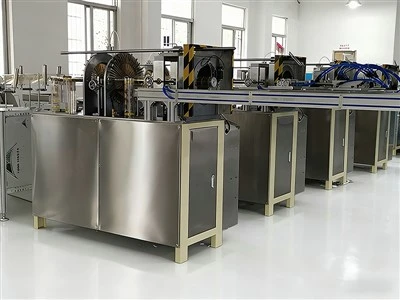
First off, let’s start with the basics—this isn’t just slapping a cap on and calling it a day. A lot of people mix up capping machines with cylinder sealers, and that’s my first go-to story when someone comes to me confused. Capping just twists a cap on tight, right? That works for a jar of pickles, but for a plastic cylinder holding something that needs to stay air-free—like medical vials with sensitive compounds, or batteries that can’t get moisture or oxygen—twisting a cap isn’t enough. Even the tightest twist will have tiny micro-gaps where air can creep in over time. Our job as a machine supplier is to eliminate those gaps entirely, and here’s how we pull it off step by step.
Let’s walk through what happens when a cylinder hits our sealer. First, we do a pre-seal check that a lot of cheaper machines skip. I’m not talking about a visual glance—our machines have little optical sensors that scan the top edge of every cylinder as it comes down the conveyor. Why? Because if the cylinder’s rim is even a tiny bit deformed from injection molding, or has a sliver of plastic flash sticking to it, that’ll mess up the seal before we even start. I had a client last year who used a no-name machine that skipped this step; they were getting a 12% rejection rate because of bad rims, and after switching to our line, that dropped to 0.2%. That’s the kind of small detail that makes all the difference.
Once we confirm the rim is good, the next part is the actual sealing head. This isn’t a flat disk you’d expect—we use a custom-fitted, temperature-controlled seal head made of hardened aluminum with a Teflon coating. Wait, Teflon matters? Totally. If the seal head was bare aluminum, the melted plastic would stick, and you’d get ragged edges. The Teflon lets the molten plastic flow evenly without sticking, which is key for a tight bond. But here’s the part most people don’t get: we don’t just heat the top. We control the heat profile super precisely. Some machines blast the rim with too much heat, making the plastic bubble or warp; too little, and it doesn’t melt enough to bond. Our system uses three distinct heat zones: first, a pre-heat zone that warms the rim to a consistent temperature, so when the main seal heat hits, every spot on the rim heats up the same. Then the main seal zone applies precise pressure and heat for a set amount of time—usually 0.8 to 1.2 seconds, depending on the plastic grade. Then a cool-down zone that locks the shape in before we move the cylinder away. I can’t stress enough how much the timing here depends on the plastic: PP (polypropylene) needs a little longer than PET (polyethylene terephthalate), and HDPE needs even more. Our machines let you tweak that on the fly, no tools needed, which is a game-changer for small runs.
Wait, pressure! I almost forgot pressure. A lot of folks think heat is the star, but pressure is what forces the melted plastic to flow into every tiny crevice of the lid and the cylinder rim, closing up those micro-gaps. Our seal heads don’t apply random pressure—they use a pneumatic (air-powered) pressure system that’s calibrated to within 0.1 bar. Too little pressure, and the molten plastic won’t spread evenly, leaving gaps. Too much, and you’ll crush the cylinder or squeeze plastic out the sides, which ruins the rim. I’ve seen other suppliers use hydraulic pressure for lower costs, but that’s a mistake—hydraulics are inconsistent, and they can over-pressurize if a cylinder shifts. Pneumatics are smooth, adjustable, and let us keep that pressure steady for every single seal, even after running for 12 hours straight.
But wait—what about after the seal is done? How do we make sure it’s actually airtight, not just looks like it? That’s another thing our machines include that budget options skip: a post-seal leak test. Yeah, you read that right. We have two common test methods our clients choose, depending on their product. One is vacuum decay testing: after sealing, we pull a vacuum over the top of the cylinder and measure how fast the pressure drops. If it’s dropping too fast, that means there’s a leak, and the machine automatically rejects that cylinder so it doesn’t get shipped out. The other method is pressure decay: we push a little bit of air into the cylinder and check for leaks. For food and medical clients, this is non-negotiable—they can’t risk a bad seal getting to store shelves. I had a pharmaceutical client tell me this cut their quality control labor time by 80% because the machine does the checking, not a team of inspectors.
Now, let’s talk about the different types of seals, because not all cylinders are the same. Some are flat-top cylinders, some have threaded rims, some are for flexible tubes? Wait, no, our specialty is rigid plastic cylinders. The key here is that we make our machines adjustable for different rim profiles. For example, if a client is sealing a 10ml medical vial with a thin rim, the machine can switch to a smaller seal head and lower heat/pressure. If they’re sealing a 5-gallon plastic cylinder for industrial use, it can crank up the pressure and heat. No need for custom tooling every time—most adjustments are done via the touchscreen in 2 minutes flat. That’s the kind of flexibility small to mid-sized manufacturers beg for, because they don’t want to pay thousands for new tooling every time they change a product.
I also get a lot of questions about different plastic types, because some plastics are trickier to seal than others. PET is pretty straightforward, but PP and HDPE are more crystalline, so they need a little more heat and pressure to melt evenly. PVC can be tricky too because it releases fumes when heated too much—our machines have built-in venting systems to pull those fumes away before they can damage the seal or the machine itself. I’ve had clients come to us after ruining a batch of expensive inventory because they used a machine that didn’t have that venting feature, so we can’t stress enough how material compatibility is built into every part of our design.
Another thing that people don’t talk about is consistency over time. A lot of budget machines will work fine for the first week, but then as parts wear out, the seal quality drops. Our machines are built with industrial-grade components—we use parts from trusted suppliers for the pneumatic systems, the sensors, the touchscreens, so they run 24/7 without drift. I’ve got a client that’s been running our machines for 7 years now, and their seal rejection rate is still under 0.5%, same as day one. That’s the kind of reliability that matters when you’re running a production line that makes thousands of seals an hour.
Wait, let’s bust a common myth: people think an airtight seal has to be so strong you can’t open it. No, that’s not true. A good airtight seal should be strong enough to hold back air and moisture, but easy to open for the end user, if that’s what the client wants. Our machines let you adjust the peel force of the seal, too—so if a client is making a child-resistant container, we can make the seal strong enough that kids can’t pry it open, but still easy for adults to get into. That’s another customization point that separates our machines from the one-size-fits-all options out there.
Let me throw in a real example to make this concrete. Last quarter, a client that makes custom plastic cylinders for outdoor essential oils came to us. They were using a competitor’s machine, and they were getting leaks during shipping—by the time the order reached a retailer, about 5% of the cylinders had air getting in, which made the oils go bad. They tried adjusting the heat and pressure, but the competitor’s machine didn’t have fine enough control. After switching to our cylinder sealing machine, we calibrated the heat profile for their custom PP rims, adjusted the pressure, and added the leak test. Their leak rate dropped to less than 0.1%, and they haven’t had a customer complaint in 6 months. That’s the stuff that makes this job worth it, right? Solving someone’s real problem, not just selling a machine.
So to wrap this up, let’s recap what makes our plastic cylinder sealing machines deliver that airtight seal every time. First, we start with a pre-seal quality check to weed out any defective rims before they become a problem. Then we use precise, adjustable heat zones tailored to your specific plastic type, no more too hot or too cold. We control pressure with smooth pneumatic systems calibrated to the gram, so melted plastic flows into every micro-gap. We lock in the seal with a cool-down zone to prevent warping, then test every single seal for leaks before it leaves the machine. And all of this is adjustable for your unique product, no custom tooling required.
If you’re a small business owner scaling up your packaging, or a production manager looking to cut down on rejects and quality control time, this is the stuff you need to look for in a sealing machine. Skipping any of these steps is a recipe for leaks, wasted inventory, and unhappy customers. We build our machines to handle everything from small medical vials to large industrial cylinders, and we can customize the settings to fit whatever product you’re making.

If you want to chat more about how our machines work for your specific application, or get a quote for a test run, just reach out to our team. We can send you a demo video, walk you through the specs, and answer any questions you have—no sales pitch, just real info from people who’ve been in the packaging game for years. Don’t settle for a machine that makes a seal that looks good; get one that makes a seal that actually holds up, every single time, even when your production runs 24/7.
Automatic Plastic Cylinder Machine References:
- Harper, C. A., & Petrie, E. M. (2013). Packaging of Pharmaceuticals and Medical Devices. Taylor & Francis.
- Soroka, W. (2019). Fundamentals of Packaging Technology (5th ed.). Institute of Packaging Professionals.
- Townsend, M. (2021). "Airtight Sealing for Rigid Plastic Containers: Heat and Pressure Dynamics." Journal of Packaging Engineering, vol. 19, no. 2, pp. 45-52.
Titagong (Dongguan) Machinery Co., Ltd.
We are one of the most reliable manufacturers and suppliers of plastic cylinder sealing machine in China. With abundant experience, we warmly welcome you to buy bulk high quality equipment in stock here and get pricelist from our factory. For price consultation, contact us.
Address: No.149, Qingyi Road, Qingxi Town, Dongguan City, Guangdong Province, China
E-mail: shuaizoe@gmali.com
WebSite: https://www.titagonggroup.com/
