Hey there! I’m a supplier of solid tires. Over the years, I’ve seen firsthand how these tires are revolutionizing the way we think about mobility, especially in industrial and heavy – duty applications. So, let’s dive into the advantages of solid tires. Solid Tire

1. Longevity and Durability
One of the biggest selling points of solid tires is their insane durability. Unlike pneumatic tires, which are filled with air, solid tires are made from solid rubber compounds. This means they’re not prone to punctures. You know how annoying it is when a pneumatic tire gets a nail or a sharp object stuck in it and goes flat? Well, with solid tires, that’s not an issue.
I remember a client who runs a large – scale construction site. They used to have a constant headache dealing with flat tires on their forklifts. Forklifts are constantly moving on rough, debris – filled ground, and pneumatic tires were just getting shredded. After switching to our solid tires, they noticed a significant drop in tire – related downtime. They didn’t have to stop work to change a flat tire every other day, and that really boosted their productivity.
Because there’s no air to lose, solid tires can withstand a lot of wear and tear. The rubber compounds we use are specifically formulated to resist abrasion, cutting, and chipping. They can handle heavy loads and high – traffic areas without showing signs of premature wear. This long lifespan means that, in the long run, you save money. You don’t have to keep buying new tires every few months like you would with some pneumatic ones.
2. Low Maintenance
Let’s talk about maintenance, or rather, the lack of it with solid tires. Pneumatic tires need regular air pressure checks. You’ve got to have a pressure gauge handy, and you need to make sure every tire is at the right pressure. If the pressure is too low, it can cause uneven wear on the tire, reduce fuel efficiency, and even pose a safety risk. And if it’s too high, well, that can also lead to problems like a rougher ride and a higher chance of a blowout.
With solid tires, this whole hassle goes out the window. There’s no air pressure to monitor. You don’t have to worry about re – inflating them when the temperature drops or when the tire heats up from extended use. All you need to do is the occasional visual inspection to check for any signs of excessive wear. And even if there’s a bit of wear, solid tires can often continue to function safely until it’s absolutely necessary to replace them.
This low – maintenance feature is a huge plus for businesses. They can focus on their core operations rather than spending time and resources on tire maintenance. For example, a warehouse that has a fleet of electric pallet jacks can use that extra time to move more inventory, which means more sales and more profit.
3. Safety
Safety is a top concern in any industry that relies on vehicles and equipment with tires. Solid tires offer several safety benefits. First off, since they don’t go flat, there’s no risk of sudden loss of control due to a blowout. A blowout in a pneumatic tire can be extremely dangerous, especially at high speeds or when carrying heavy loads. It can cause the vehicle to swerve, potentially leading to an accident.
Solid tires also provide better stability. They have a wider footprint on the ground compared to some pneumatic tires, which means more surface area in contact with the road or floor. This increased contact area improves traction, especially in wet or slippery conditions. For instance, in a food processing plant where the floors can be wet from cleaning, solid tires on the delivery trucks provide better grip, reducing the risk of slips and falls.
In addition, the construction of solid tires makes them less likely to fail under extreme conditions. They can handle high temperatures, heavy impacts, and rough terrains without deforming or losing their structural integrity. This reliability gives operators peace of mind, knowing that the tires won’t let them down when they need them the most.
4. Cost – Effectiveness in the Long Run
I know what you’re thinking. Solid tires might cost more upfront compared to pneumatic tires. But when you look at the big picture, they’re actually more cost – effective. We’ve already talked about their longevity and low maintenance, which are two major factors contributing to long – term cost savings.
Let’s break it down. Suppose you’re running a material handling business and you have a fleet of 20 forklifts. Each pneumatic tire costs around $100, and you need to replace them every six months due to punctures and wear. So, for all 20 forklifts, if each forklift has four tires, that’s $8,000 in tire costs every six months, which is $16,000 a year.
On the other hand, our solid tires cost around $300 each. But they can last two to three years. So, if you replace all the tires on your 20 forklift fleet, it’s a one – time cost of $24,000. Over the course of two years, you only spend that $24,000, while with pneumatic tires, you’d spend $32,000. That’s a significant savings of $8,000!
And then there are the hidden costs. For every tire change, you’ve got to pay your maintenance staff, and you also lose productivity during the downtime. With solid tires, you cut down on all these additional costs.
5. Versatility
Solid tires are incredibly versatile. They can be used in a wide range of applications. In the industrial sector, they’re perfect for forklifts, pallet jacks, and other material – handling equipment. They can handle the heavy loads and constant start – stop motions without a problem.
In the outdoor equipment industry, solid tires are a great choice for golf carts, ATVs, and small tractors. They can withstand the rough terrain of golf courses, dirt tracks, and farm fields. Even in the aviation industry, solid tires are used for aircraft ground support equipment, where reliability and durability are crucial.
We can also customize solid tires to meet specific requirements. Whether you need a tire with a special tread pattern for better traction on a particular surface or a tire with a certain hardness to handle a specific load, we can make it happen. This versatility means that no matter what your needs are, there’s a solid tire out there for you.
Reach Out for a Purchase
If you’re in the market for tires and you’ve been dealing with the headaches of pneumatic tires, I highly recommend giving solid tires a try. The advantages are clear: durability, low maintenance, safety, cost – effectiveness, and versatility.
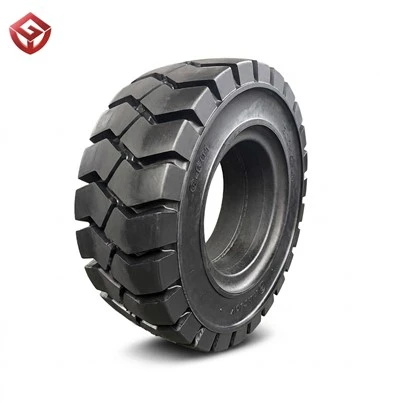
We’re here to help you find the perfect solid tire solution for your business. Whether you’re a small warehouse owner or manage a large industrial complex, we’ve got the expertise and the products to meet your needs. Reach out to us to start a conversation about your requirements, and let’s see how we can make your operations more efficient and cost – effective with our solid tires.
References
- Tire Industry Association, “Guidelines for Tire Selection and Usage,” Tire Industry Association Publications.
- Rubber Manufacturers Association, “Properties and Performance of Solid Rubber Tires,” Rubber Manufacturers Association Reports.
- Industry research on tire performance and cost – analysis from various trade journals.
Solid Tire So, don’t wait! Let’s get started on finding the right solid tires for you.
Zhejiang Guowei Rubber Co., Ltd.
Zhejiang Guowei Rubber Co., Ltd. is one of the most professional solid tire manufacturers and suppliers in China. With abundant experience, we warmly welcome you to buy advanced solid tire in stock here and get pricelist from our factory. Quality products and reasonable price are available.
Address: No. 10, Nanyang 4th Road, Duqiao Town, Linhai City, Taizhou, Zhejiang Province, China
E-mail: gwsolid@gmail.com
WebSite: https://www.forkliftsolidtires.com/
