In the evolving landscape of healthcare, the role of service robots has become increasingly prominent. As a supplier deeply entrenched in this dynamic industry, one question that frequently surfaces in discussions with clients is whether healthcare service robots can be customized for specific needs. The answer is an unequivocal yes, and in this blog, I will delve into the intricacies of customization, its importance, and how it can revolutionize healthcare delivery. Healthcare Service Robots
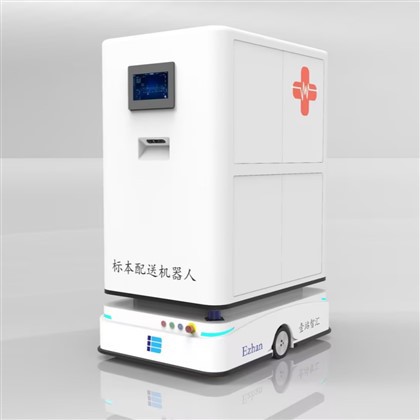
The Need for Customization in Healthcare Service Robots
Healthcare is a highly specialized field, with diverse requirements across different settings, patient populations, and medical procedures. A one – size – fits – all approach simply does not work when it comes to service robots in healthcare. Different hospitals, clinics, and long – term care facilities have unique workflows, infrastructure, and patient demographics. For example, a large tertiary hospital may require robots capable of handling complex diagnostic tasks, transporting high – value medical equipment, and interacting with a wide range of medical staff. In contrast, a small rural clinic may need more basic yet reliable robots for simple patient assistance, such as delivering medications or helping patients move around.
Moreover, patients themselves have varying needs. Elderly patients may require gentle and slow – moving robots that can provide physical support and companionship. Younger patients with specific medical conditions, such as those undergoing rehabilitation, may need robots designed to assist with targeted therapy exercises. Customization allows healthcare institutions to address these diverse needs effectively, enhancing the overall quality of care.
Technological Feasibility of Customization
From a technological perspective, customizing healthcare service robots is entirely feasible. Modern robotics platforms are built on flexible architectures that can be easily adapted. For instance, the software that controls robot movements, tasks, and interactions can be reprogrammed. This allows for the creation of specific algorithms tailored to unique healthcare processes.
In terms of hardware, many components of healthcare service robots are modular. This means that different sensors, grippers, and mobility systems can be swapped out or added based on the requirements. For example, a robot initially designed for general patient monitoring can be equipped with additional sensors for more specialized tasks like cardiac monitoring. These sensors can be integrated into the existing robot framework without significant overhauls.
Artificial intelligence and machine learning also play a crucial role in customization. Service robots can be trained to recognize specific patterns relevant to different medical scenarios. For example, in a dermatology clinic, a robot can be trained to identify different skin conditions based on a customized dataset. This flexible application of AI technology enables robots to perform highly specialized tasks.
Areas of Customization
Functional Customization
One of the most significant areas of customization is function. Healthcare service robots can be designed to perform a wide range of tasks. In a surgical setting, robots can be customized to assist surgeons with precise movements, reducing the margin of error. They can be equipped with articulating arms and high – resolution cameras to provide better visualization and manipulation during minimally invasive procedures.
In long – term care facilities, robots can be customized for patient care, such as assisting with bathing, dressing, and feeding. These robots can be programmed to interact patiently with the elderly, taking into account their physical limitations and potential cognitive impairments.
For hospitals, inventory management is a critical function. Robots can be customized to track medical supplies, order new ones when stocks are low, and ensure that the right equipment is available at the right time in the right place. This helps to streamline hospital operations and reduce costs.
Design Customization
Design customization is also crucial, especially in terms of patient acceptance and integration into the healthcare environment. The appearance of robots can be customized to be more appealing and less intimidating. For example, robots can be designed with soft, rounded edges and friendly colors, similar to the design of many pediatric medical devices. This helps to create a more welcoming environment for patients.
In addition, the size and shape of robots can be adjusted according to the specific space constraints of different healthcare facilities. In a compact clinic, a smaller, more maneuverable robot may be required, while a large hospital may be able to accommodate larger, more complex robots.
Interaction Customization
How robots interact with patients and medical staff can also be customized. Communication styles can be tailored to different audiences. For example, when interacting with children, robots can use a more playful and engaging tone. When communicating with medical professionals, they can provide detailed and technical information in a clear and concise manner.
Customization also allows for the adaptation of interaction to different cultural contexts. In some cultures, physical contact may be more acceptable than in others. Robots can be programmed to respect these cultural norms during patient – robot interactions.
Benefits of Customized Healthcare Service Robots
Improved Patient Care
Customized robots can provide more personalized care to patients. By tailoring the robot’s functions and interactions to the specific needs of individual patients, they can enhance the patient experience and improve health outcomes. For example, a robot designed for a patient with a particular neurological disorder can provide targeted rehabilitation exercises, leading to better recovery.
Enhanced Efficiency in Healthcare Facilities
Customization improves the efficiency of healthcare facilities. Robots can be programmed to perform tasks in a way that aligns with the existing workflows of the facility. This reduces the time and effort required from medical staff, allowing them to focus on more complex and critical aspects of patient care. For example, a robot customized for medication delivery can follow the hospital’s specific medication management protocols, ensuring timely and accurate delivery.
Cost – Effectiveness
Although the initial investment in customizing healthcare service robots may be higher, in the long run, it can be cost – effective. By reducing the need for additional staff and minimizing errors, customized robots can help healthcare facilities save on labor costs and avoid costly medical mistakes.
Our Role as a Supplier
As a leading supplier of healthcare service robots, we are committed to providing highly customizable solutions. Our team of engineers and designers work closely with clients to understand their specific needs, whether it is a small – scale clinic or a large – scale hospital.
We start the customization process with in – depth consultations. During these consultations, we gather information about the facility’s operations, patient demographics, and specific tasks that the robot is expected to perform. We then use this information to design a customized robot solution.
Our R & D team has the expertise to develop both software and hardware components. We can integrate the latest technologies, such as AI and advanced sensors, into the customized robots. We also provide comprehensive training and after – sales support to ensure that our clients can make the most of their customized robots.
Conclusion

The ability to customize healthcare service robots for specific needs is a game – changer in the healthcare industry. It allows for more personalized patient care, improved efficiency in healthcare facilities, and cost – effectiveness in the long run. As a supplier, we are at the forefront of this innovation, offering tailor – made solutions that meet the diverse needs of our clients.
Customized AMR/AGV Robot If you are a healthcare provider looking to enhance your services with customized healthcare service robots, we would love to discuss your requirements. Our expertise and commitment to quality ensure that we can deliver the perfect solution for your specific needs. Reach out to us to start a conversation about how our robots can revolutionize your healthcare delivery.
References
- Huang, D. J., & Maresky, N. (2018). Medical robots: Getting in step with health care. McKinsey & Company.
- Wang, H., & Edwards, B. (2020). Customization in robotic system design for healthcare applications. Journal of Medical Robotics Research.
- Menendez, R., & Piccioni, F. (2019). Future trends in customized healthcare robots. International Journal of Advanced Robotic Systems.
Shenzhen Ezhan Technology Co., Ltd.
We’re known as one of the most reliable healthcare service robots manufacturers and suppliers in China. With abundant experience, we warmly welcome you to buy bulk customized healthcare service robots from our factory. If you have any enquiry about cooperation, please feel free to email us.
Address: Room 1808, 1809, 1810, Building 2, Aipark, Baolong 4th Road, Longgang District, Shenzhen City
E-mail: sales01@ezhankeji.com
WebSite: https://www.ezhanrobot.com/
