Hey there! I’m a supplier of Other Automatic Machines, and today I wanna chat about the cooling requirements for these machines. Other Automatic Machine

First off, let’s understand why cooling is so crucial for Other Automatic Machines. These machines often have a bunch of components working non – stop. All that activity generates heat. If the heat isn’t managed properly, it can cause all sorts of problems. For example, high temperatures can lead to component failure. Think about it like a human body. When we get too hot, we start to feel sick and our organs don’t work as well. The same goes for these machines. Components like motors, circuit boards, and sensors can overheat and malfunction, which means the machine might break down or not work as efficiently as it should.
Now, let’s dive into the different factors that determine the cooling requirements.
Heat Generation Sources
The main sources of heat in Other Automatic Machines are the electrical components. Motors are a big culprit. When a motor runs, it converts electrical energy into mechanical energy, but not all of that energy is used effectively. Some of it is lost as heat. The more powerful the motor, the more heat it generates. Circuit boards also produce heat. As electricity flows through the various circuits and chips on the board, resistance causes heat to build up.
Another source of heat is friction. Moving parts in the machine, like gears and belts, rub against each other. This friction generates heat. The faster these parts move and the more force they exert, the more heat is produced.
Machine Design and Enclosure
The design of the machine and its enclosure play a huge role in cooling requirements. If the machine is compactly designed with components packed closely together, heat can get trapped. There isn’t enough space for the heat to dissipate. On the other hand, a well – designed machine with proper spacing between components allows for better air circulation.
The enclosure also matters. A sealed enclosure can protect the machine from dust and moisture, but it can also prevent heat from escaping. So, if the enclosure is sealed, we need to find other ways to cool the machine, like using fans or heat exchangers.
Operating Environment
The environment where the machine operates is another important factor. If the machine is in a hot and humid place, it will have a harder time cooling down. The ambient temperature affects how quickly the heat can be transferred from the machine to the surrounding air. For example, if the machine is in a factory where the temperature is already high, the cooling system has to work even harder to keep the machine at a safe temperature.
Cooling Methods
There are several cooling methods that we can use for Other Automatic Machines.
Air Cooling
Air cooling is one of the most common methods. It’s relatively simple and cost – effective. We use fans to blow air over the hot components. The moving air carries away the heat. There are two types of air cooling: natural and forced.
Natural air cooling relies on the natural movement of air. If the machine has vents and the layout allows for air to flow freely, heat can dissipate without the need for a fan. But in most cases, we use forced air cooling. Fans are installed inside the machine to blow air directly over the components. We can also use external fans to draw hot air out of the machine.
However, air cooling has its limitations. It’s not very effective in high – heat situations or in environments with high dust levels. Dust can clog the fans and vents, reducing the cooling efficiency.
Liquid Cooling
Liquid cooling is a more efficient method for cooling high – power Other Automatic Machines. In a liquid cooling system, a coolant (usually a mixture of water and antifreeze) is circulated through pipes or channels in the machine. The coolant absorbs the heat from the components and then transfers it to a radiator or heat exchanger, where the heat is dissipated into the air.
Liquid cooling can handle a lot more heat than air cooling. It’s also quieter because there are no large fans making noise. But it’s more expensive to set up and maintain. The coolant needs to be checked regularly, and there’s a risk of leaks.
Heat Pipes
Heat pipes are another option. They’re small, efficient, and can transfer heat quickly. A heat pipe is a sealed tube filled with a working fluid. One end of the heat pipe is in contact with the hot component, and the other end is connected to a heat sink. The working fluid inside the heat pipe evaporates when it absorbs heat from the component. The vapor then moves to the cooler end of the heat pipe, where it condenses and releases the heat. The condensed fluid then flows back to the hot end, and the cycle repeats.
Heat pipes are great for small – to – medium – sized machines. They don’t require a lot of space and can be easily integrated into the machine’s design.
Determining the Right Cooling System
So, how do we figure out the right cooling system for an Other Automatic Machine? Well, we need to do a heat load calculation. This involves determining how much heat the machine generates. We look at the power consumption of the electrical components, the friction heat, and any other sources of heat.
Once we know the heat load, we can choose the appropriate cooling method. If the heat load is relatively low, air cooling might be sufficient. But if it’s high, we might need to go with liquid cooling or a combination of cooling methods.
We also need to consider the cost, the space available in the machine, and the operating environment. For example, if the machine is going to be in a dusty environment, we might want to avoid air cooling or use a dust – proof air cooling system.
Maintenance of Cooling Systems
Maintaining the cooling system is just as important as choosing the right one. For air cooling systems, we need to regularly clean the fans and vents to prevent dust buildup. We also need to check the fan motors to make sure they’re working properly.
In liquid cooling systems, we need to check the coolant level and its quality. The coolant can break down over time, so it might need to be replaced. We also need to inspect the pipes and connections for leaks.
For heat pipes, we need to make sure they’re properly connected and that there’s no damage to the pipes.
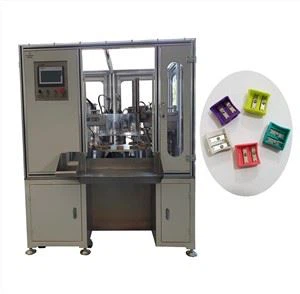
If you’re in the market for an Other Automatic Machine and are worried about the cooling requirements, don’t hesitate to reach out. We’ve got the expertise to help you choose the right machine with the appropriate cooling system. Whether it’s a small – scale operation or a large – scale industrial setup, we can find a solution that fits your needs. Let’s have a chat and see how we can work together to get you the best machine for your business.
Pencil Sharpener Assembly Machine References
- "Thermal Management of Electronic Systems" by Craig D. Hansen
- "Industrial Machinery Cooling Handbook" by John Smith
Ruian Hensen Automatic Machinery Co., Ltd.
Ruian Hensen Automatic Machinery Co., Ltd. is well-known as one of the leading automatic machine manufacturers and suppliers in China, featured by quality products and good price. Please feel free to buy customized automatic machine made in China here from our factory. Contact us for quotation.
Address: No.199, 3rd Kaifa road, Dongshan industrial area, Ruian, Zhejiang China
E-mail: ymy3562@vip.163.com
WebSite: https://www.hensen-machine.com/
