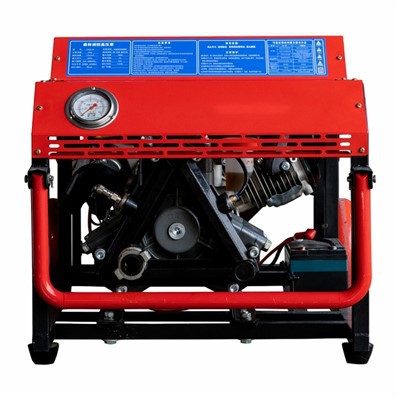
As a supplier of fire fighting pumps, understanding the concept of Net Positive Suction Head (NPSH) is crucial. NPSH plays a fundamental role in the proper functioning and performance of fire fighting pumps. In this blog, we’ll delve into what NPSH is, why it’s essential for fire fighting pumps, and how it impacts the overall efficiency and reliability of these critical systems. Fire Fighting Pump
What is Net Positive Suction Head (NPSH)?
Net Positive Suction Head is a measure of the pressure available at the suction inlet of a pump to prevent the formation of vapor bubbles. When the pressure at the pump inlet drops below the vapor pressure of the liquid being pumped, vapor bubbles form. This phenomenon is known as cavitation. Cavitation can cause a variety of problems, including reduced pump efficiency, increased noise and vibration, and even damage to the pump impeller and other components.
Mathematically, NPSH is defined as the difference between the absolute pressure at the pump suction and the vapor pressure of the liquid at the pumping temperature. There are two types of NPSH: NPSH available (NPSHa) and NPSH required (NPSHr).
- NPSH Available (NPSHa): This is the actual pressure available at the pump suction. It is determined by factors such as the elevation of the liquid source, the atmospheric pressure, the friction losses in the suction piping, and the velocity head.
- NPSH Required (NPSHr): This is the minimum pressure required at the pump suction to prevent cavitation. It is a characteristic of the pump itself and is determined by the pump design, speed, and flow rate.
Importance of NPSH for Fire Fighting Pumps
In the context of fire fighting, the reliable operation of pumps is of utmost importance. Fire fighting pumps are often required to operate under challenging conditions, such as low water levels or high flow rates. Ensuring that the NPSHa is greater than the NPSHr is essential to prevent cavitation and maintain the pump’s performance.
- Preventing Cavitation: Cavitation can cause significant damage to fire fighting pumps, leading to reduced flow rates, increased maintenance costs, and even pump failure. By maintaining a sufficient NPSH, we can prevent cavitation and ensure the long – term reliability of the pump.
- Maintaining Pump Performance: A pump operating with an adequate NPSH will operate more efficiently, delivering the required flow rate and pressure. This is crucial in fire fighting situations, where every second counts and the pump needs to provide a consistent and reliable water supply.
- Safety and Reliability: In a fire emergency, the last thing you want is for the pump to fail due to cavitation. By understanding and managing NPSH, we can ensure that the fire fighting pump is safe and reliable, providing the necessary water supply to extinguish the fire.
Factors Affecting NPSH Required for Fire Fighting Pumps
Several factors can affect the NPSHr of a fire fighting pump:
- Pump Design: Different pump designs have different NPSHr requirements. For example, pumps with larger impellers or higher flow rates generally require a higher NPSH. The design of the suction inlet, the impeller shape, and the number of impeller vanes can also influence the NPSHr.
- Flow Rate: As the flow rate through the pump increases, the NPSHr also increases. This is because at higher flow rates, the pressure drop across the pump suction increases, requiring a higher pressure at the suction inlet to prevent cavitation.
- Liquid Properties: The properties of the liquid being pumped, such as its vapor pressure, density, and viscosity, can affect the NPSHr. For example, liquids with a higher vapor pressure require a higher NPSH to prevent cavitation.
- Pump Speed: The speed at which the pump operates can also impact the NPSHr. Higher pump speeds generally result in a higher NPSHr requirement.
Calculating NPSH for Fire Fighting Pumps
Calculating the NPSHa and NPSHr for a fire fighting pump is a complex process that requires a detailed understanding of the pump system. Here is a general overview of the steps involved in calculating NPSH:
- Determine the Atmospheric Pressure: The atmospheric pressure at the pump location is an important factor in calculating NPSHa. It can be obtained from local weather stations or using standard atmospheric pressure tables.
- Calculate the Elevation Head: The elevation head is the difference in height between the liquid source and the pump suction. It can be calculated using the formula: Elevation Head = (Height of liquid source – Height of pump suction) × Specific Gravity of the liquid.
- Determine the Friction Losses in the Suction Piping: The friction losses in the suction piping can be calculated using the Darcy – Weisbach equation or other empirical formulas. These losses depend on the pipe diameter, length, roughness, and flow rate.
- Calculate the Velocity Head: The velocity head is the kinetic energy of the liquid flowing through the suction pipe. It can be calculated using the formula: Velocity Head = (Velocity of liquid)^2 / (2 × g), where g is the acceleration due to gravity.
- Calculate the NPSHa: The NPSHa can be calculated using the formula: NPSHa = Atmospheric Pressure + Elevation Head – Friction Losses – Velocity Head – Vapor Pressure of the liquid.
- Determine the NPSHr: The NPSHr is provided by the pump manufacturer and is typically given in the pump performance curve. It is a function of the pump flow rate and speed.
Ensuring Adequate NPSH for Fire Fighting Pumps
To ensure that the NPSHa is greater than the NPSHr for a fire fighting pump, several measures can be taken:
- Proper System Design: The suction piping system should be designed to minimize friction losses and ensure a smooth flow of liquid to the pump. This includes using the appropriate pipe diameter, minimizing bends and fittings, and ensuring proper installation.
- Selecting the Right Pump: When selecting a fire fighting pump, it is important to choose a pump with an NPSHr that is compatible with the available NPSHa. The pump manufacturer can provide guidance on the appropriate pump selection based on the specific application requirements.
- Monitoring and Maintenance: Regular monitoring of the pump system, including the NPSH, is essential to detect any potential issues early. Maintenance activities, such as cleaning the suction strainer and checking the pump impeller for damage, can also help to ensure the proper functioning of the pump.
Conclusion
In conclusion, understanding the concept of Net Positive Suction Head (NPSH) is essential for the proper operation of fire fighting pumps. By ensuring that the NPSHa is greater than the NPSHr, we can prevent cavitation, maintain pump performance, and ensure the safety and reliability of the fire fighting system.
As a leading supplier of fire fighting pumps, we are committed to providing high – quality pumps that are designed to operate under a wide range of conditions. Our team of experts can help you select the right pump for your specific application and ensure that it is installed and maintained correctly to meet the NPSH requirements.
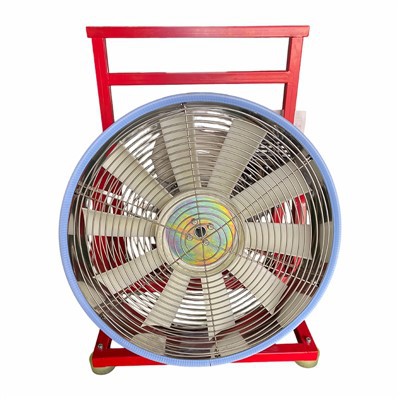
Fire Ventilator If you are in the market for a fire fighting pump or have any questions about NPSH or our products, we encourage you to contact us for a consultation. Our experienced sales team is ready to assist you in finding the best solution for your fire protection needs.
References
- Karassik, I. J., Messina, J. P., Cooper, P. T., & Heald, C. C. (2008). Pump Handbook. McGraw – Hill.
- Idelchik, I. E. (1994). Handbook of Hydraulic Resistance. CRC Press.
- Crane Co. (1988). Flow of Fluids Through Valves, Fittings, and Pipe. Technical Paper No. 410.
Taizhou Mingxin Fire Protection Technology Co., Ltd.
As one of the most professional fire fighting pump manufacturers in China, we warmly welcome you to buy bulk high quality fire fighting pump made in China here from our factory. Good service and low price are available.
Address: Group 3, Xinzhouqiao Community, Jingtai Road Subdistrict, Hailing District, Taizhou City (within Taizhou Station North Logistics Management Co., Ltd.)
E-mail: mingxinxf@163.com
WebSite: https://www.mxfiretech.com/
